2026 Top Water Soluble Organic Nitrogen Fertilizer Types?
As sustainable crop nutrition gains attention in 2026, growers are examining Water Soluble Organic Nitrogen Fertilizer more carefully. They want efficient nitrogen, cleaner application, and dependable crop performance. Yet the market includes several distinct materials, and their behavior can differ sharply.
This guide introduces major types, including amino acid fertilizers, protein hydrolysates, fish-based liquids, plant-derived nitrogen extracts, and soluble manure-based products. Each type offers a different nitrogen profile. Some release nutrients quickly, while others support slower microbial conversion. Amino acid products may suit foliar programs and transplant recovery. Protein hydrolysates can support root-zone feeding when used with proper dilution. Fish-based fertilizers often provide organic nutrients, but their odor and salt content require attention.
Practical selection should begin with the crop, application method, and soil condition. Check total nitrogen, organic nitrogen percentage, pH, salinity, and guaranteed analysis. Labels matter. So does storage. A cold warehouse, blocked filter, or poorly mixed tank can reduce field performance. Compatibility testing in a small container is wise before wider application. No single type wins everywhere. Field trials often reveal differences that product brochures hide. Results may change with temperature, irrigation quality, microbial activity, and crop timing. This article also considers limitations, because organic nitrogen is not automatically superior. Some products act slowly. Others cost more per unit of available nitrogen. Careful comparison can help growers choose a safer, more practical solution for modern nutrient management.
What Is Water-Soluble Organic Nitrogen Fertilizer?
Water-soluble organic nitrogen fertilizer contains nitrogen in carbon-based compounds that dissolve in water. It is not simply any liquid fertilizer. Common forms include amino acids, short peptides, protein hydrolysates, and soluble organic extracts. These materials may come from plant residues, animal by-products, or fermentation processes. Their nitrogen can support plant growth while adding small amounts of organic carbon to the root environment.
The exact value depends on nitrogen form, concentration, and processing quality. Amino-acid solutions usually dissolve quickly and can support foliar or root applications. Peptide-rich products release nitrogen more gradually, especially when soil microbes break down larger molecules. In greenhouse work, I would check the label, mixing behavior, and crop response before increasing the rate. A clear solution is useful.
But clear does not mean complete. Some products contain organic nitrogen alongside ammonium or nitrate nitrogen. Others may leave sediment, create odor, or vary between batches. Solubility also changes with water temperature and pH. This distinction matters. Soil tests, tissue analysis, and careful records provide more reliable guidance than marketing language. I would avoid assuming that a higher organic nitrogen percentage always produces better growth. Excess nitrogen can still create soft stems, delayed maturity, or nutrient imbalance, even when the source is organic.
How Water-Soluble Organic Nitrogen Fertilizers Are Classified
2026 Top Water Soluble Organic Nitrogen Fertilizer Types?
Water-soluble organic nitrogen fertilizers are classified by nitrogen source, solubility, and release behavior. Common groups include amino acid fertilizers, protein hydrolysates, enzymatic extracts, and soluble humic-based formulations. Amino acid products usually dissolve rapidly, making them suitable for fertigation and foliar application. Protein hydrolysates release nitrogen more gradually, depending on peptide size and processing conditions. Humic products are often supportive amendments, not complete nitrogen fertilizers.
The classification becomes clearer through laboratory testing. Total nitrogen measures quantity, but soluble organic nitrogen shows immediate availability. A product may contain 10% total nitrogen yet release only part of it quickly. That difference matters in drip irrigation. The European Commission’s Fertilising Products Regulation, Regulation (EU) 2019/1009, emphasizes declared nutrient content, safety, and product function categories. These requirements help separate true fertilizers from vague soil conditioners.
Scale also matters. FAO’s World Food and Agriculture Statistical Yearbook 2024 reported roughly 185 million tonnes of fertilizer nutrients used globally in 2022. Organic nitrogen remains a smaller segment, but interest is rising as growers seek lower-salt inputs.
Classification should also consider carbon origin, biodegradability, pH, and microbial stability. Industry reports often group products by application method, yet that approach can hide important chemistry. A better label shows nitrogen form, soluble fraction, and expected release time. Real field performance is still variable. Temperature, irrigation volume, and soil biology can change results. The category boundaries are not always clean.
Top Water-Soluble Organic Nitrogen Fertilizer Types in 2026
Top Water-Soluble Organic Nitrogen Fertilizer Types in 2026
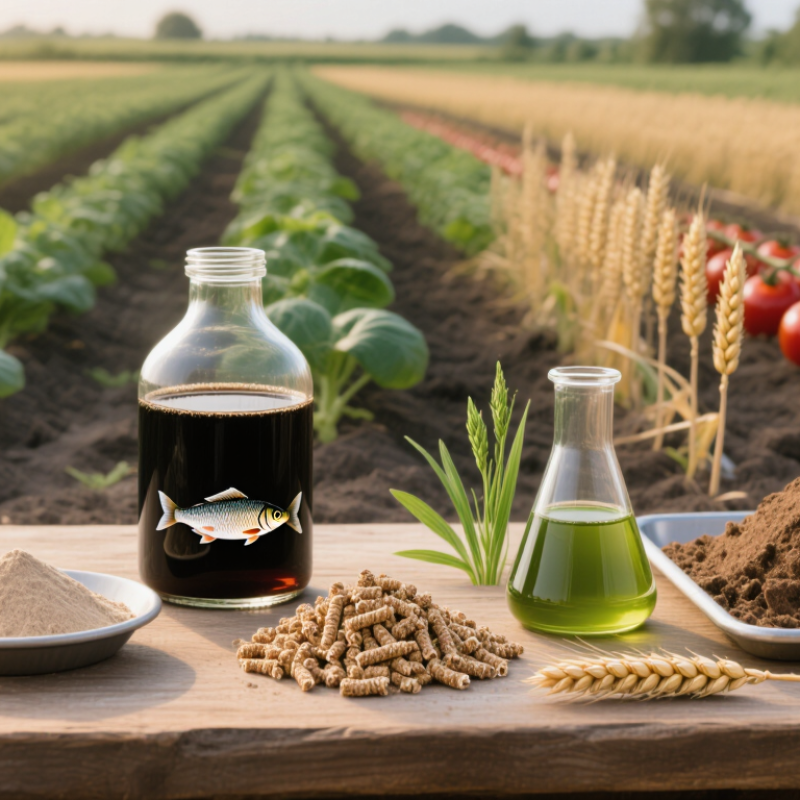
In 2026, growers are choosing water-soluble organic nitrogen fertilizers for faster application and more accurate feeding. The main types include fish hydrolysate, amino acid hydrolysate, soluble plant-protein fertilizer, and feather-derived nitrogen. Fish hydrolysate often supplies nitrogen with small amounts of phosphorus and trace minerals. Amino acid products can support young plants during transplanting or recovery. Plant-protein fertilizers, commonly made from soybean or other crops, offer a more predictable nitrogen profile when properly processed. Feather hydrolysate contains concentrated organic nitrogen, but soil microbes must break it down before roots can use most of it.
Field experience shows that solubility alone does not guarantee good fertigation performance. Some organic liquids contain fine particles that settle overnight or block narrow filters. I check the label, dilution rate, pH, electrical conductivity, and filtration requirements before use. A small jar test can reveal sediment problems within one day. It is simple.
Reliable suppliers should provide laboratory data for total nitrogen, organic nitrogen, moisture, and contaminant screening. Testing matters because nitrogen values can vary between batches, especially in fish and plant-based materials. These fertilizers also release nitrogen at different speeds. Warm, biologically active soil usually improves conversion, while cold soil may delay results. I have seen plants remain pale after a heavy application because the nitrogen was still unavailable. That mistake is easy to repeat. Combining soil tests, crop demand, and measured applications produces more dependable results than choosing the highest nitrogen percentage.
2026 Top Water-Soluble Organic Nitrogen Fertilizer Types
Typical total nitrogen content of commonly used water-soluble or readily dispersible organic nitrogen fertilizer types. Actual analysis varies by raw material and processing method.
Values represent typical total nitrogen percentages by weight reported for agricultural organic fertilizer materials; they are not market-share estimates.
How Each Fertilizer Type Supplies Nitrogen to Plants
2026 Top Water Soluble Organic Nitrogen Fertilizer Types?
How Each Fertilizer Type Supplies Nitrogen to Plants
Water-soluble nitrogen fertilizers differ mainly in how quickly plants can access nitrogen.
Nitrate nitrogen enters roots directly through water movement and supports rapid leaf growth. It performs well in drip irrigation, especially when crops show pale lower leaves. Ammonium nitrogen is also available immediately, but roots absorb it more selectively. Soil microbes may later convert ammonium into nitrate. This process depends on oxygen, temperature, and moisture.
Urea is an organic nitrogen compound that dissolves quickly in water.
After application, the enzyme urease changes urea into ammonium. The conversion can be fast in warm, moist soil, yet surface applications may lose nitrogen as ammonia gas. That is a practical weakness. Amino acid fertilizers supply nitrogen in small organic molecules. Some plants can absorb these molecules directly through roots or leaves. However, their effect depends on crop species, concentration, and leaf condition.
Protein hydrolysates contain short peptides and amino acids.
Microorganisms break larger molecules down, releasing ammonium for later plant uptake. This creates a slower, less predictable supply than nitrate.
In my field observations, plants often respond unevenly when organic nitrogen is applied to cold soil. Testing irrigation water and soil nitrate can prevent guesswork. A clear label should state total nitrogen and its soluble forms. More nitrogen is not always better. Overapplication can produce soft growth, delayed maturity, or salt stress.