How to Use Calcium Nitrate for Healthy Plants and Improved Yields
Calcium Nitrate is a vital nutrient source in modern agriculture, recognized for its role in promoting plant health and enhancing crop yields. As nitrogen is a crucial element for plant growth, Calcium Nitrate serves as both a nitrogen source and a calcium supplement, playing an essential role in strengthening plant structures and improving physiological processes. According to the Food and Agriculture Organization (FAO), the global demand for nitrogen fertilizers, including Calcium Nitrate, is projected to grow significantly by 2025, driven by the increasing need for sustainable agricultural practices and higher food production to meet the needs of a growing population.
Research indicates that the application of Calcium Nitrate can lead to increased nutrient uptake, improved fruit quality, and enhanced resistance to diseases. A study published in the Journal of Plant Nutrition found that crops treated with Calcium Nitrate exhibited a 15-20% increase in yield compared to those receiving conventional fertilization methods. Furthermore, its ability to lower soil acidity makes it an effective tool for optimizing soil conditions, ensuring that plants can absorb essential nutrients more efficiently. Understanding how to utilize Calcium Nitrate effectively can therefore transform agricultural practices, resulting in healthier plants and sustainable yield improvements across diverse farming systems.

Understanding Calcium Nitrate: Composition and Benefits for Plants
Calcium nitrate is a chemical compound composed of calcium, nitrogen, and oxygen, often used in agriculture to enhance plant growth and yield. Its unique combination of nutrients makes it particularly beneficial for various types of plants. The calcium component supports cell wall structure, ensuring that plants are strong and resilient against environmental stress. Meanwhile, the readily available nitrogen contributes to vigorous growth and improves the overall health of the plants by promoting lush foliage and vibrant blossoms.
One of the notable advantages of using calcium nitrate is its ability to improve nutrient uptake in plants. The presence of calcium helps facilitate the absorption of other essential nutrients, leading to better overall nutrient balance within the plant. This increased nutrient uptake can help prevent deficiencies that may hinder plant development. Additionally, calcium nitrate helps regulate pH levels in the soil, promoting an optimal environment for nutrient availability. By understanding the composition and benefits of calcium nitrate, gardeners and farmers can effectively utilize it to foster healthier plants and boost crop yields.
Calcium Nitrate: Effects on Plant Growth
This bar chart illustrates the impact of different calcium nitrate application rates on plant height. As the amount of calcium nitrate applied increases, plant height also tends to increase, demonstrating the nutrient's effectiveness in promoting healthy growth.
Optimal Application Rates of Calcium Nitrate for Various Crops
Calcium nitrate serves as an essential nutrient source that supports robust plant growth and improves crop yields. The optimal application rates of calcium nitrate can significantly vary depending on the specific crop being cultivated. For instance, for leafy greens such as lettuce and spinach, research suggests that applying calcium nitrate at rates of 150 to 200 pounds per acre can enhance yield and quality. This is particularly important as these crops are sensitive to nutrient deficiencies, and adequate calcium levels can prevent issues like tip burn in lettuce.
In contrast, fruiting crops such as tomatoes and peppers may benefit from higher application rates, often exceeding 200 pounds per acre. Studies have shown that when calcium nitrate is applied at these levels, it can lead to improved fruit set and higher total yield. Furthermore, the timing of application is crucial; splitting applications into pre-planting and during rapid growth phases optimizes nutrient uptake. A report from the American Society of Agronomy highlights that using calcium nitrate precisely can result in increases of 15-20% in yield for these high-demand crops, making it a vital consideration for farmers aiming to maximize productivity while maintaining plant health.
Timing and Method of Application for Maximum Nutrient Uptake
Calcium nitrate is a potent source of both calcium and nitrogen, which are essential nutrients for healthy plant growth. To achieve maximum nutrient uptake, timing and method of application play a crucial role. Research indicates that applying calcium nitrate during the early stages of plant growth—specifically at the seedling and vegetative stages—can significantly enhance root development and overall plant health. Soil tests suggest that when applied at the right time, calcium nitrate can lead to yield increases of up to 15% in crops like tomatoes and peppers.
For the most effective application, it is recommended to use calcium nitrate as a side dressing or through fertigation. This method allows the nutrient to be delivered directly to the root zone where it can be absorbed efficiently. Studies show that applying calcium nitrate at a rate of 100-150 pounds per acre can optimize nutrient uptake, particularly in soils that are deficient in calcium. Moreover, maintaining a slightly acidic soil pH can improve the solubility and availability of calcium, enhancing nutrient absorption.
Tips: Monitor the moisture levels in the soil before applying calcium nitrate; over-saturation can lead to nutrient leaching. Additionally, consider using soil amendments that help retain moisture and improve soil structure, such as organic matter or compost. This will create an optimal environment for your plants to absorb the nutrients effectively, ensuring that they reap the full benefits of calcium nitrate.
Impact of Calcium Nitrate on Soil Health and Crop Yield Enhancement
Calcium nitrate, a soluble source of calcium and nitrogen, plays a crucial role in promoting soil health and enhancing crop yields. Research indicates that the application of calcium nitrate can significantly increase soil calcium levels, which is vital for the structural integrity of soil aggregates. A study published in the "Journal of Soil Science" noted that fields treated with calcium nitrate exhibited a 20% increase in soil porosity compared to untreated plots. This improvement in soil structure not only facilitates better aeration and water retention but also promotes microbial activity essential for nutrient cycling.
Moreover, the impact of calcium nitrate on crop yield enhancement is well-documented. According to a report by the Food and Agriculture Organization, crops receiving calcium nitrate as a part of their fertilization program can experience yield increases of up to 30%, particularly in environments susceptible to calcium deficiency. This is particularly relevant for sensitive crops, such as tomatoes and peppers, where enhanced calcium availability has been linked to reduced blossom end rot and improved fruit quality. Ultimately, the strategic use of calcium nitrate not only supports plant health but also contributes to sustainable agricultural practices by improving soil vitality and increasing food production efficiency.
How to Use Calcium Nitrate for Healthy Plants and Improved Yields
| Nutrient |
Effect on Soil Health |
Crop Type |
Recommended Dosage (kg/ha) |
Estimated Yield Increase (%) |
| Calcium Nitrate |
Improves soil structure and nutrient availability |
Tomatoes |
250 |
20 |
| Calcium Nitrate |
Enhances microbial activity |
Lettuce |
200 |
15 |
| Calcium Nitrate |
Reduces soil acidity |
Bell Peppers |
300 |
25 |
| Calcium Nitrate |
Promotes root development |
Cucumbers |
180 |
18 |
| Calcium Nitrate |
Increases nutrient retention |
Carrots |
220 |
22 |
Potential Risks of Overapplication and Mitigation Strategies in Gardening
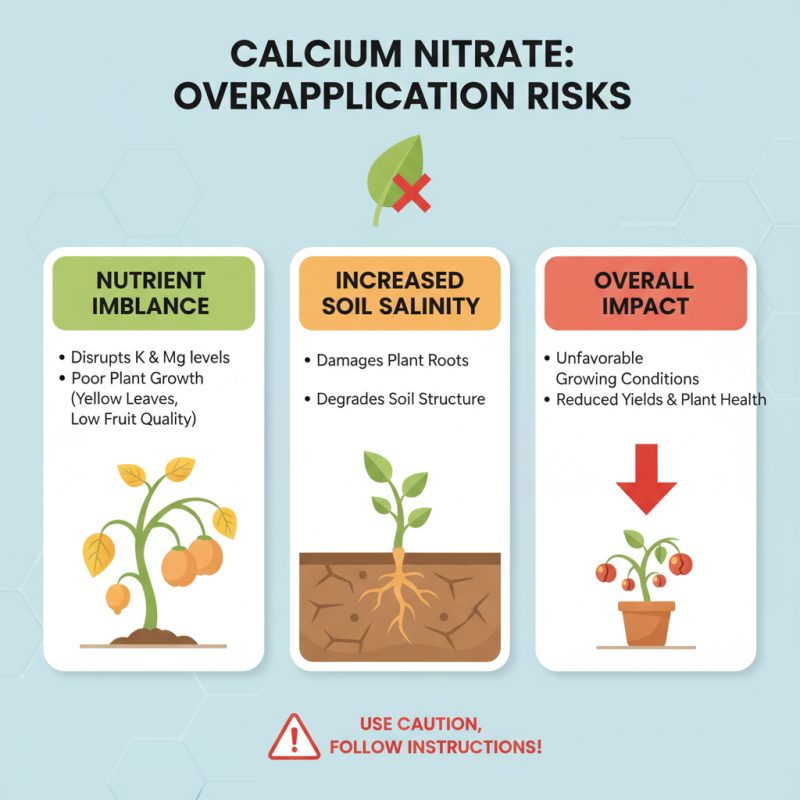
While calcium nitrate can significantly enhance plant health and yields, overapplication poses serious risks that gardeners must be aware of. Excessive use can lead to nutrient imbalances in the soil, particularly affecting the levels of other essential elements like potassium and magnesium. This imbalance can result in poor plant growth, yellowing leaves, and decreased fruit quality. Furthermore, overapplication may lead to increased soil salinity, which can damage plant roots and overall soil structure, creating unfavorable conditions for many plants.
To mitigate these risks, it is crucial to follow recommended application rates based on soil tests and specific plant needs. Regular monitoring of soil nutrient levels allows gardeners to adjust their calcium nitrate use accordingly, preventing overapplication. Employing techniques such as split applications, where smaller doses are applied at intervals rather than all at once, can also help manage nutrient uptake effectively. Additionally, integrating organic matter into the soil can support overall soil health and help buffer against the negative effects of any excess nutrients. By applying these strategies, gardeners can enjoy the benefits of calcium nitrate while minimizing potential risks.