Why is Calcium Nitrate Essential for Plant Growth and Soil Health?
Calcium Nitrate is a vital component in the realm of agriculture, serving as both a nutrient provider for plants and a contributor to soil health. According to Dr. Emily Green, an expert in soil science and plant nutrition, "Calcium Nitrate not only supplies essential calcium and nitrogen but also enhances soil structure and microbial activity." This dual role makes it an indispensable element for sustainable agricultural practices and improved crop yield.
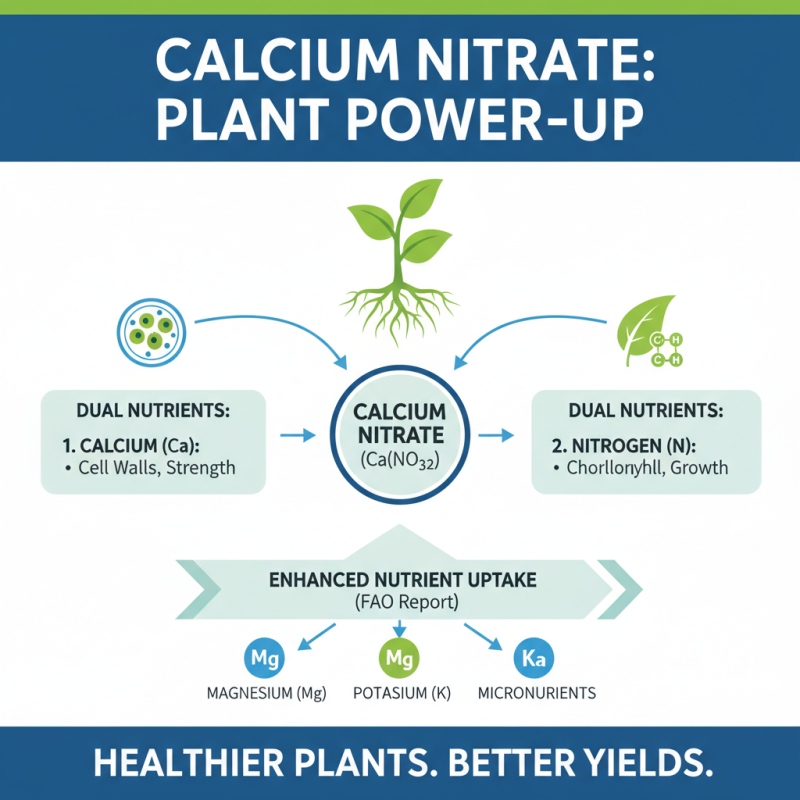
In essence, Calcium Nitrate plays a critical part in supporting plant growth by ensuring proper nutrient uptake and strengthening cellular structures. The calcium contributes to cell wall stability, while the nitrogen aids in chlorophyll production, leading to robust and healthy plants. Furthermore, when integrated into soil management practices, Calcium Nitrate helps to maintain a balanced pH and promotes beneficial microbial populations, which are crucial for nutrient cycling.
As global agricultural demands rise, understanding and utilizing Calcium Nitrate effectively can lead to more resilient cropping systems. Farmers and agronomists must recognize the essential nature of this compound, not just in terms of immediate plant nutrition but also in fostering long-term soil health and sustainability.

The Role of Calcium Nitrate in Plant Nutrient Uptake
Calcium nitrate is a vital compound that plays a significant role in plant nutrient uptake, primarily due to its dual supply of calcium and nitrogen. Calcium is essential for plant cell wall structure, while nitrogen is crucial for chlorophyll production and overall growth. According to a report by the Food and Agriculture Organization (FAO), calcium nitrate can enhance the uptake of other vital nutrients, such as magnesium and potassium, thereby improving overall nutrient balance in the soil.
Studies have shown that the application of calcium nitrate can increase the absorption of micronutrients, particularly in crops like tomatoes and peppers. A report from the International Plant Nutrition Institute (IPNI) indicates that using calcium nitrate significantly increased yields by up to 25% in certain crops under controlled conditions. This can be attributed to its ability to facilitate a more favorable soil pH and improve soil structure, thus allowing for more extensive root development and increased nutrient availability. With such proven benefits, calcium nitrate remains a top choice for farmers aiming to optimize their crop production and ensure long-term soil health.
Impact of Calcium Nitrate on Soil pH and Structure
Calcium nitrate plays a vital role in promoting soil health by maintaining optimal pH levels and enhancing soil structure. The addition of calcium nitrate helps to lower soil acidity, making it more neutral. This balance is essential for nutrient availability; many nutrients are more accessible to plants when soil pH is within the ideal range of 6.0 to 7.5. A more stable pH not only supports plant growth but also encourages beneficial microbial activity, which is crucial for nutrient cycling in the soil.
Moreover, calcium nitrate contributes to improved soil structure by providing calcium, which helps to bind soil particles together. This aggregation results in better aeration and water retention, allowing roots to access moisture and oxygen more effectively. Healthy soil structure also reduces erosion and runoff, promoting sustainable agricultural practices.
**Tips:** For gardeners looking to optimize their soil health, consider conducting a soil test to determine pH levels before applying calcium nitrate. Additionally, incorporate organic matter to enhance the benefits of calcium nitrate by fostering a diverse microbial community in the soil, further improving its structure and fertility.
Impact of Calcium Nitrate on Soil pH and Structure
This chart illustrates the effects of different concentrations of calcium nitrate on soil pH levels and soil structure over time. The data shows how increasing amounts of calcium nitrate can lead to improved soil health, reflected in better pH balance and enhanced structure.
Calcium Nitrate's Contribution to Plant Health and Development
Calcium nitrate plays a crucial role in promoting plant health and development. This compound serves as an excellent source of both calcium and nitrogen, two essential nutrients that plants require for various physiological processes. Calcium is vital for maintaining cell wall structure, ensuring stability, and facilitating nutrient transport within the plant. It also plays a critical role in signaling pathways that help plants respond to environmental stresses. A deficiency in calcium can lead to disorders such as blossom end rot in tomatoes and tip burn in lettuce, indicating just how essential it is for normal growth and development.
In addition to calcium, the nitrogen in calcium nitrate supports vigorous growth and robust foliage, which is fundamental for photosynthesis and energy production in plants. Adequate nitrogen levels promote the synthesis of chlorophyll, enhancing the plant's ability to capture sunlight and convert it into energy. Furthermore, calcium nitrate can improve soil health by promoting beneficial microbial activity, which is crucial for nutrient cycling and organic matter decomposition. By integrating calcium nitrate into soil management practices, growers can ensure their plants not only thrive but also remain resilient against diseases and environmental challenges.
Environmental Benefits of Using Calcium Nitrate in Agriculture
Calcium nitrate plays a vital role in agriculture, contributing significantly to environmental benefits when used as a fertilizer. With its ability to enhance plant health, calcium nitrate helps optimize growth by providing essential calcium and nitrogen. These nutrients not only prevent disorders in plants but also improve overall yield, making it a preferred choice among farmers seeking sustainable options. Moreover, the incorporation of calcium nitrate can lead to a more efficient nutrient management system, reducing the reliance on chemical fertilizers and thereby minimizing their environmental impact.
Tips: When using calcium nitrate, ensure that it is applied at the right growth stage for maximum benefits. Combining it with organic matter can further enhance soil health and microbial activity, creating a balanced fertilization approach that supports crop productivity without depleting the soil.
The shift towards more sustainable practices is evident, as emerging research highlights the potential for biostimulants and controlled-release fertilizers to reduce nitrogen fertilizer use by up to 25%. This not only preserves soil integrity but also aids in improving water quality by minimizing nutrient runoff into aquatic ecosystems, showcasing calcium nitrate’s role in fostering environmentally friendly agricultural practices.
Best Practices for Applying Calcium Nitrate in Soil Management
When applying calcium nitrate for effective soil management, it is crucial to consider the timing and method of application. Ideally, calcium nitrate should be applied during the growing season when plants are actively taking up nutrients. This ensures that the calcium and nitrogen provided can be utilized efficiently to promote healthy growth. Incorporating calcium nitrate into the soil can be done through broadcasting or fertigation, where it is dissolved in irrigation water, allowing for even distribution and reducing nutrient wastage.
Moreover, soil testing is an essential practice before application. This helps determine existing nutrient levels and pH balance, enabling the formulation of a tailored fertilization strategy. Maintaining the right soil pH (around 6.0-7.0) enhances calcium nitrate's effectiveness by promoting optimal nutrient availability. Additionally, it's important to monitor crop responses to calcium nitrate application, adjusting rates and timings as needed based on visual assessments or further soil tests to ensure ongoing plant health and soil vitality.