Why Choose Water Soluble Granular Fertilizer for Your Crops?
Choosing the right fertilizer is crucial for crop success. Among various options, Water Soluble Granular Fertilizer stands out for its unique properties. It dissolves easily in water, providing essential nutrients quickly to plants. This quick uptake supports healthier growth and better yields.
Farmers appreciate Water Soluble Granular Fertilizer for its versatility. It suits a wide range of crops and soil types. Plus, it allows for precise nutrient management, reducing waste. However, it’s important to use it correctly. Over-application can lead to nutrient runoff and environmental concerns.
Understanding the benefits and challenges of Water Soluble Granular Fertilizer helps maximize its potential. It can enhance productivity, but it requires careful planning. Farmers must consider their specific crop needs and soil conditions. Making informed choices leads to better results in the field.
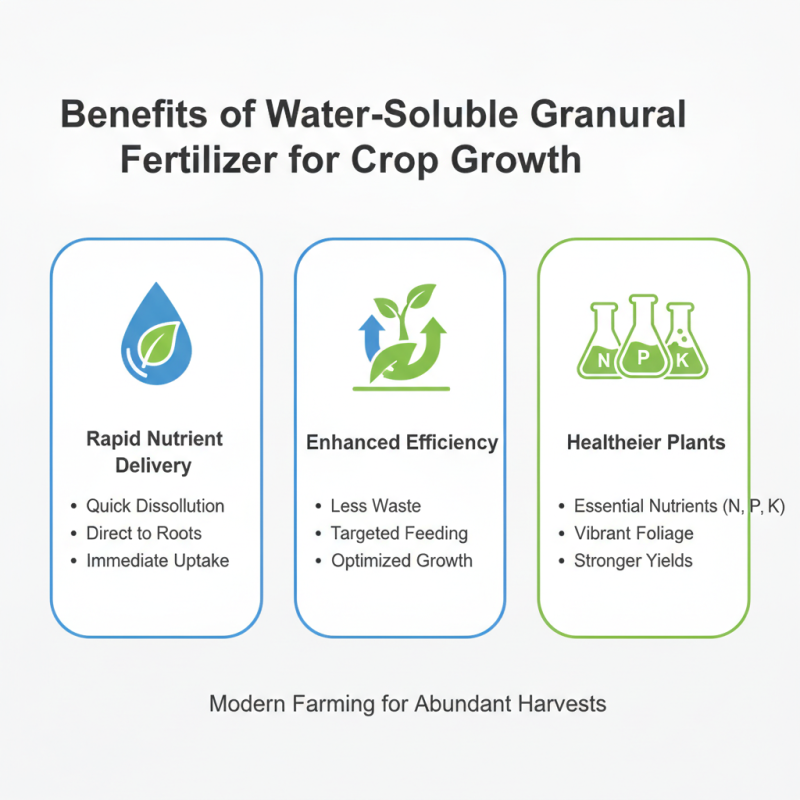
Benefits of Water Soluble Granular Fertilizer for Crop Growth
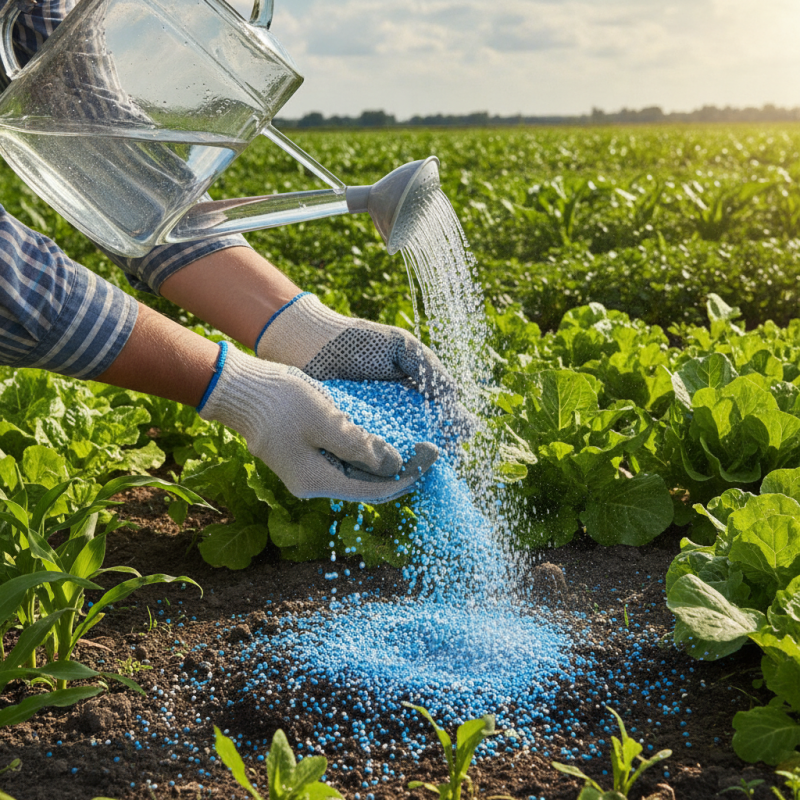
Water soluble granular fertilizers are increasingly popular among farmers for their efficiency in crop growth. These fertilizers dissolve quickly in water, providing essential nutrients directly to the plant roots. This ensures that crops receive the necessary nutrients faster and more effectively than traditional fertilizers. Whether it’s nitrogen, phosphorus, or potassium, the right blend can lead to vibrant and healthy plants.
One notable benefit is the ease of application. Farmers can mix the fertilizer with irrigation systems, ensuring uniform distribution. This reduces wastage and minimizes environmental impact. However, caution is necessary. Overapplication can lead to nutrient runoff, harming local ecosystems. It's essential to understand the specific needs of your crops and soil conditions before application.
Furthermore, water soluble granular fertilizers allow for precise nutrient management. Farmers can tailor their fertilization strategies across different growth stages. This adaptability promotes sustainable agriculture practices. Yet, finding the right balance is crucial. Trial and error may be needed to determine the optimal application rates for different crops. It's a journey of learning and growth, where experience plays a vital role in success.
How Water Soluble Fertilizers Enhance Nutrient Availability
Water soluble fertilizers play a crucial role in enhancing nutrient availability for crops. Their unique formulation allows for rapid dissolution in water, making nutrients accessible to plants almost immediately. According to a report by the Soil Science Society, crops treated with water soluble fertilizers can show yield increases of up to 30%. This is largely due to the improved uptake of essential nutrients like nitrogen, phosphorus, and potassium.
Using water soluble granular fertilizers can help address nutrient deficiencies quicker than traditional methods. Farmers often observe healthier foliage and improved root development shortly after application. While these fertilizers are effective, it is essential to use them judiciously. Over-application can lead to nutrient leaching, which harms both plants and the environment. Regular soil testing is recommended to tailor fertilization strategies to specific crop needs.
Tips: Always monitor soil nutrient levels before application. This ensures you are not overspending on fertilizers. Integrating water soluble nutrients into a broader soil management program can lead to sustainable growth. Experimenting with different formulations can sometimes yield unexpected results, so be ready to adjust your approach based on crop response.
Application Techniques for Water Soluble Granular Fertilizers
Water-soluble granular fertilizers (WSGF) are gaining popularity among modern farmers. They provide essential nutrients efficiently. When applied correctly, they can enhance crop yield and quality. Industry data shows that WSGF can increase nutrient absorption by up to 30% compared to traditional fertilizers. This improved efficiency can lead to better growth in various crops, ensuring that farmers meet market demands.
Application techniques for WSGF must be precise. One common method is fertigation, where fertilizers are mixed with irrigation water. Studies indicate that fertigation can reduce fertilizer waste and promote uniform distribution. Additionally, applying WSGF in the early growth stages can maximize absorption. Farmers are encouraged to monitor soil moisture and nutrient levels to avoid over-fertilization. Excess nutrients can lead to environmental issues, such as waterway pollution.
Another effective approach is foliar feeding, where WSGF is applied directly to plant leaves. This method can provide immediate nutrient uptake. However, it requires careful timing and concentration checks. Mismanagement can stress plants and lead to nutrient burns. These challenges highlight the importance of farmer education on application techniques. Balancing effectiveness and sustainability is crucial for optimized crop production.
Environmental Impact of Using Water Soluble Fertilizers
Using water-soluble granular fertilizers has notable environmental benefits. These fertilizers dissolve quickly and efficiently in water, allowing for precise application. This reduces the likelihood of nutrient runoff, which can harm local ecosystems. When nutrients are properly absorbed, crops thrive without excessive chemical inputs.
Another important aspect is soil health. Water-soluble fertilizers can enhance microbial activity in the soil. Healthy soil contributes to better crop yields and reduces the need for additional chemical amendments. However, there is a risk of over-application. Farmers must carefully monitor soil needs to avoid potential toxicity.
Sustainable farming practices encourage the use of these fertilizers in moderation. It’s vital to balance crop needs with environmental preservation. Striking this balance may require ongoing education and adaptation from growers. Regular soil testing can provide critical insights into nutrient levels and environmental conditions. Ultimately, responsible use of water-soluble fertilizers can lead to healthier crops and ecosystems.
Comparing Water Soluble and Traditional Fertilizers for Crop Yield
Water soluble granular fertilizers offer distinct advantages over traditional fertilizers, especially in enhancing crop yield. A 2021 study noted that farmers using water soluble options saw a yield increase of 15-20% compared to those using conventional fertilizers. This improvement is primarily due to the rapid nutrient uptake. Crops absorb these granules quickly, allowing for immediate access to essential nutrients. Water soluble fertilizers also reduce runoff and leaching, ensuring that more nutrients reach the plants.
It's important to consider the application methods. Traditional fertilizers often require more frequent applications, which can lead to soil depletion over time. Conversely, water soluble options allow for precise nutrient management. A report by the International Fertilizer Association emphasized how targeted applications can optimize growth stages, enhancing overall productivity. However, farmers must remain vigilant. Misapplication risks nutrient imbalances, which can hinder growth.
Innovative delivery systems are also a key factor. Many water soluble fertilizers are designed to blend seamlessly with irrigation systems. This integration saves time and labor costs. Nonetheless, the high solubility can pose challenges in certain soil types, leading to potential nutrient leaching. Balancing efficiency and sustainability remains a crucial consideration for modern agriculture.
Why Choose Water Soluble Granular Fertilizer for Your Crops? - Comparing Water Soluble and Traditional Fertilizers for Crop Yield
| Fertilizer Type |
Nutrient Release Rate |
Crop Yield Increase (%) |
Application Ease |
Cost per Acre |
| Water Soluble Granular |
Rapid Release |
20-30% |
Easy |
$200 |
| Traditional Granular |
Slow Release |
10-15% |
Moderate |
$150 |
| Organic Fertilizer |
Variable Release |
5-10% |
Difficult |
$250 |