Modern crop production depends on more than nitrogen, phosphorus, and potassium. Tiny shortages can still reduce flowering, color, root growth, and harvest quality. Water Soluble Micronutrient Fertilizer supplies essential elements through irrigation water, foliar sprays, or carefully managed soil applications.
Plant nutrition specialist Dr. Patrick H. Brown has stated, “Micronutrients are essential for plant growth, even though plants require them in very small quantities.” This principle guides our review of the top ten types of Water Soluble Micronutrient Fertilizer. The list includes zinc sulfate, zinc chelate, iron chelate, manganese sulfate, copper sulfate, boric acid, sodium molybdate, magnesium sulfate, calcium nitrate blends, and multi-micronutrient formulations. Each product behaves differently in water and soil.
Details matter.
A clear solution is not always an effective solution. Hard water may reduce compatibility, while high soil pH can limit iron, zinc, and manganese uptake. A grower may see pale young leaves, weak stems, or poor fruit set before laboratory results confirm the deficiency. Practical selection should consider crop species, application method, water quality, soil analysis, and label instructions. Experience also teaches caution. More fertilizer does not mean better nutrition, and excessive micronutrients can damage roots or leaves. This overview is useful, but not perfect; local testing remains necessary. By comparing chemical form, solubility, plant availability, and field performance, readers can make safer and more informed fertilizer decisions.
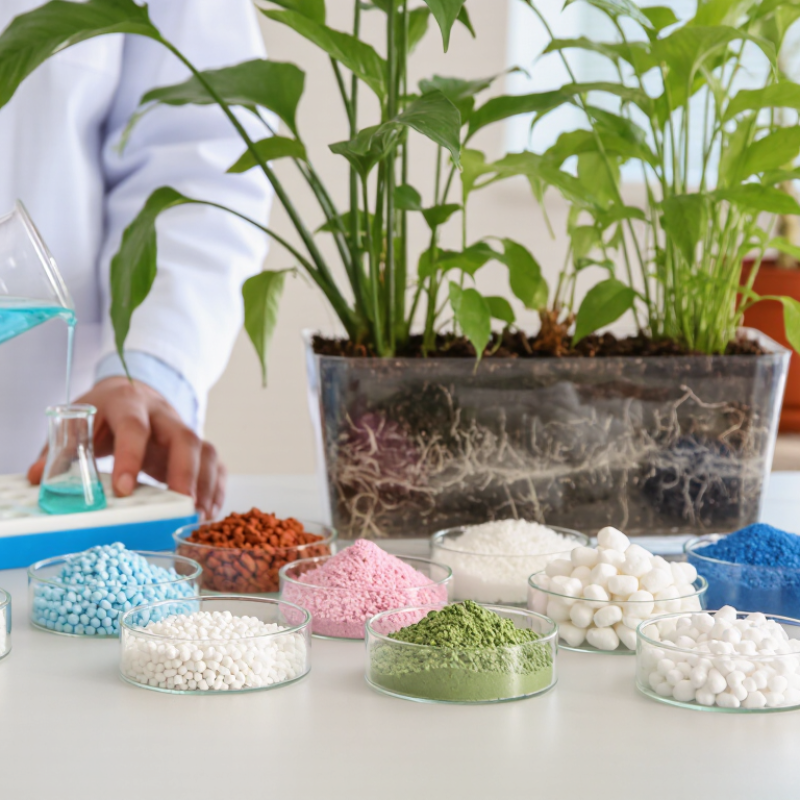
Among the top ten types of water-soluble micronutrient fertilizers, iron and zinc chelates stand out for precise crop feeding. A chelating molecule surrounds the metal ion and helps keep it available in solution. This matters when irrigation water contains bicarbonates or when soil pH reduces nutrient availability. Iron chelates can correct young-leaf chlorosis, while zinc chelates support enzyme activity, internode growth, and early root development.
Application accuracy still matters. A grower should test irrigation water, soil pH, and existing nutrient levels before choosing a rate. Do not assume every chelate performs equally in alkaline conditions. Some iron forms remain more stable at higher pH, while others can release iron too quickly. Zinc products also differ in concentration and compatibility with phosphate fertilizers. A small jar test can reveal cloudiness or sediment before a full tank is mixed.
Use clean water and dissolve the chelate completely. Root-zone feeding often gives steadier results, while foliar sprays may act faster during visible deficiency. Spray during cooler hours and avoid excessive concentration, especially on tender leaves. I have found that visual recovery can be uneven across a field, even after a technically correct application. That result deserves investigation, not another automatic dose. Poor drainage, compacted soil, or damaged roots may be the real limitation. Keep records of weather, water quality, leaf color, and application timing. Small details often explain large differences.

The chart compares representative nominal elemental concentrations by mass. Chelated sources are generally selected for improved micronutrient availability and more precise fertigation, while sulfate and molybdate salts provide concentrated, fully water-soluble alternatives.
Values are representative industry-grade analyses and may vary by formulation, hydration state, and local fertilizer standards. Concentration does not by itself indicate agronomic effectiveness or the recommended application rate.
Iron Sulfates and Zinc Sulfates: Fast-Acting Inorganic Options
Iron sulfate and zinc sulfate are practical choices in the water-soluble micronutrient fertilizer category. They dissolve quickly and deliver nutrients near active roots. Iron sulfate can support chlorophyll formation, especially when young leaves turn yellow but their veins remain green. Zinc sulfate supports enzyme activity, shoot development, and normal leaf expansion.
These fertilizers work best when application follows a soil or tissue test. High-pH soils may lock iron and zinc away, even after repeated applications. Iron sulfate can also lower soil pH slightly, which may help acidic-soil crops but harm sensitive plants. Zinc sulfate requires careful measurement. Excess zinc may interfere with iron or phosphorus uptake. Foliar spraying can act quickly, yet concentrated solutions may scorch leaves under bright sunlight. I have seen this mistake happen after an urgent correction. Speed is useful, but it is not always safer.
Tips: Dissolve the fertilizer completely in clean water. Check the spray water’s pH and hardness when possible. Apply during cool morning conditions, and test a small area first. Avoid mixing sulfates with strongly alkaline products unless compatibility has been verified. A simple jar test can reveal sediment before it blocks equipment. Keep records of rate, crop stage, weather, and leaf response. These details make later adjustments more reliable. 北京pk赛车
| No. | Fertilizer Type | Chemical Formula | Typical Guaranteed Nutrient Content | Water Solubility at 20°C | Main Agricultural Use | Key Characteristics |
|---|---|---|---|---|---|---|
| 1 | Ferrous Sulfate Heptahydrate | FeSO4·7H2O | Approximately 19–20% Fe; approximately 10–11% S | Approximately 260–300 g/L | Soil application and fertigation for iron-deficient, usually acidic soils | Fast-acting and economical; ferrous iron can oxidize to less soluble forms in alkaline or well-aerated soils |
| 2 | Ferrous Sulfate Monohydrate | FeSO4·H2O | Approximately 30–33% Fe; approximately 17–19% S | Approximately 150–200 g/L | Fertigation, soil incorporation, and correction of iron deficiency | Higher nutrient concentration than the heptahydrate form; requires careful dissolution and storage away from moisture |
| 3 | Ferrous Sulfate Solution | FeSO4(aq) | Commonly 2–8% soluble Fe; sulfur content varies by formulation | Fully miscible as a prepared liquid, subject to oxidation | Direct fertigation and localized soil drenching | Ready to apply and rapidly available; should be protected from prolonged air exposure and high-pH mixtures |
| 4 | Ferrous Ammonium Sulfate Hexahydrate | (NH4)2Fe(SO4)2·6H2O | Approximately 14–15% Fe; approximately 14–15% N; approximately 27–28% S | Approximately 200–270 g/L | Specialty fertigation and soil application where ammonium nitrogen is acceptable | More stable than simple ferrous sulfate in storage; supplies iron, ammonium nitrogen, and sulfur |
| 5 | Zinc Sulfate Heptahydrate | ZnSO4·7H2O | Approximately 21–23% Zn; approximately 10–11% S | Approximately 400–500 g/L | Fertigation, foliar feeding, and soil correction of zinc deficiency | Highly water soluble and fast acting; commonly used for foliar sprays at carefully controlled concentrations |
| 6 | Zinc Sulfate Monohydrate | ZnSO4·H2O | Approximately 34–36% Zn; approximately 17–18% S | Approximately 300–400 g/L | High-analysis fertigation, foliar application, and soil incorporation | Higher zinc concentration per unit mass; generally acidic in solution and effective for rapid zinc delivery |
| 7 | Zinc Sulfate Solution | ZnSO4(aq) | Commonly 5–15% soluble Zn; sulfur content varies by formulation | Fully miscible as a prepared liquid | Direct fertigation, foliar feeding, and seed-zone application | Convenient liquid handling and quick availability; compatibility should be checked before tank mixing |
| 8 | Ferrous-Zinc Sulfate Blend | FeSO4 + ZnSO4 | Typically 3–10% Fe and 3–10% Zn; sulfur varies by blend ratio | Usually high; depends on the hydrate forms and blend composition | Combined correction where iron and zinc deficiencies occur together | Provides two soluble micronutrients in one application; excessive rates may cause antagonism or leaf injury |
| 9 | Iron-Zinc-Sulfur Water-Soluble Compound Fertilizer | Formulation-dependent sulfate mixture | Commonly 2–8% Fe, 2–8% Zn, and 5–15% S | Formulation-dependent; designed for complete dissolution | Fertigation and foliar feeding in intensive horticultural production | Combines sulfate-based micronutrients; application should follow a water-quality and crop-sensitivity test |
| 10 | Acidified Iron and Zinc Sulfate Solution | FeSO4 + ZnSO4 in an acidified aqueous medium | Typically 1–6% Fe, 1–6% Zn, and variable sulfur content | Fully soluble when maintained within the formulation pH range | Low-volume fertigation and targeted foliar application | Lower pH helps reduce precipitation in suitable water; avoid mixing with alkaline materials, phosphates, or concentrated calcium solutions |
Note: Nutrient percentages and solubility values are typical ranges for commercial-grade sulfate materials. Actual specifications vary with hydration state, purity, temperature, and formulation. Always follow the product label and perform a jar test before tank mixing.
Manganese sulfates and copper sulfates are practical mineral sources in water-soluble micronutrient fertilizers. Manganese sulfate supplies manganese for chlorophyll formation and enzyme activity. Copper sulfate supports photosynthesis, lignin development, and reproductive growth. Small doses matter. Their value depends on soil testing, crop demand, and application timing.
Manganese sulfate usually dissolves well in fertigation tanks and foliar sprays. It can help crops growing in high-pH soils, where manganese becomes less available. However, repeated applications may increase leaf injury risk. A pale young leaf does not always indicate manganese deficiency. Iron, magnesium, or root damage can create similar symptoms. Confirm the cause before treating the field.
Copper sulfate requires more caution because copper can accumulate in soil. It may also react with phosphate-rich products, alkaline water, or carbonate materials. Use clean water. A small jar test can reveal clouding or sediment before tank mixing. Apply only the tested rate, and keep spray coverage even. Practical field checks often show uneven nozzle output, rather than fertilizer shortage, causing patchy symptoms. One common mistake is judging success by a greener leaf alone. Root growth, tissue analysis, and follow-up observations provide stronger evidence. Temperature, leaf age, and water quality can still complicate interpretation.
Boric acid and sodium molybdate support two different crop functions. Boron helps cell-wall formation, pollen growth, and sugar movement. Molybdenum supports nitrate reduction and biological nitrogen fixation. FAO’s World Fertilizer Trends report shows that nitrogen remains the dominant plant nutrient, which makes molybdenum especially relevant where nitrogen efficiency is weak. Small deficiencies can quietly reduce yield.
Boric acid is useful when soil tests or leaf analysis indicate low available boron. It can support flowering in crops such as oilseeds, vegetables, and fruit trees. However, the safety margin is narrow. Excess boron may damage leaf edges and root tips. Application should follow crop-specific rates, water quality checks, and calibrated spraying equipment. Do not guess.
Sodium molybdate supplies soluble molybdenum in very small quantities. It can improve nitrogen use in legumes, especially when nodulation is poor or soils are acidic. The International Plant Nutrition Institute has reported that micronutrient responses depend strongly on soil pH, organic matter, and crop demand. Field results may differ, even within one farm. That is the uncomfortable part. A tissue test, untreated strip, and yield record provide stronger evidence than visual symptoms alone. Boric acid and sodium molybdate should be selected as targeted tools, not routine replacements for balanced fertilization. Data from the FAO fertilizer statistics and recognized soil-testing laboratories can guide timing, concentration, and follow-up decisions.
Liquid blends and chelated mixes solve different micronutrient problems. FAO’s World Food and Agriculture Statistical Yearbook 2023 reports global fertilizer use above 185 million tonnes of nutrients in 2021. That scale increases pressure for precise application. Liquid blends suit fertigation and foliar feeding. They distribute quickly through irrigation lines and can combine zinc, boron, iron, or manganese. However, compatibility matters. A clear tank can still hide precipitation after dilution. Hard water, alkaline pH, and phosphate salts may reduce performance.
Chelated mixes protect metal nutrients from unwanted reactions in soil or spray water. EDTA chelates often perform well in mildly acidic conditions. EDDHA-based iron is more suitable for alkaline soils, although the cost is usually higher. The International Fertilizer Association’s 2024 technical outlook emphasizes nutrient-use efficiency and better application management across modern fertilizer systems. Field testing remains essential. A tissue analysis may show iron deficiency, while the real problem is restricted roots. I have seen pale leaves improve slowly, not overnight. That delay is easy to misread. Growers should compare label rates, water quality, crop stage, and soil pH before choosing a formula. Sometimes the simpler blend works better. Sometimes it does not.