Leave Your Message
Choosing among the Top Water Soluble Seedling Fertilizer Suppliers Worldwide requires more than comparing prices. Seedlings have delicate roots, limited nutrient reserves, and little tolerance for high salt levels. A reliable supplier should provide fully soluble formulas, clear nutrient analysis, consistent batch quality, and practical application guidance. Essential details include nitrogen form, phosphorus availability, micronutrient balance, electrical conductivity, and compatibility with irrigation systems.
Dr. Patrick Brown, Professor of Plant Nutrition at the University of California, Davis, has emphasized, “The right source, right rate, right time, and right place remain central to responsible nutrient management.” This principle is highly relevant to Water Soluble Seedling Fertilizer. A product may dissolve quickly in a clean tank but perform poorly in hard water. Another formula may produce vivid green leaves while weakening root development. Results can vary.
This guide examines leading suppliers through an experience-based and evidence-focused lens. It considers greenhouse trials, technical support, manufacturing transparency, packaging, and regional distribution. Supplier claims should be checked against laboratory data and independent crop observations. No ranking is perfect. Local water chemistry, crop variety, temperature, and grower skill can change outcomes.
The strongest suppliers do not simply sell fertilizer. They help growers avoid clogged emitters, uneven feeding, and premature nutrient stress. Their recommendations should be specific, measurable, and realistic. A useful supplier explains what happens inside the mixing tank and around the young root. That practical clarity matters.
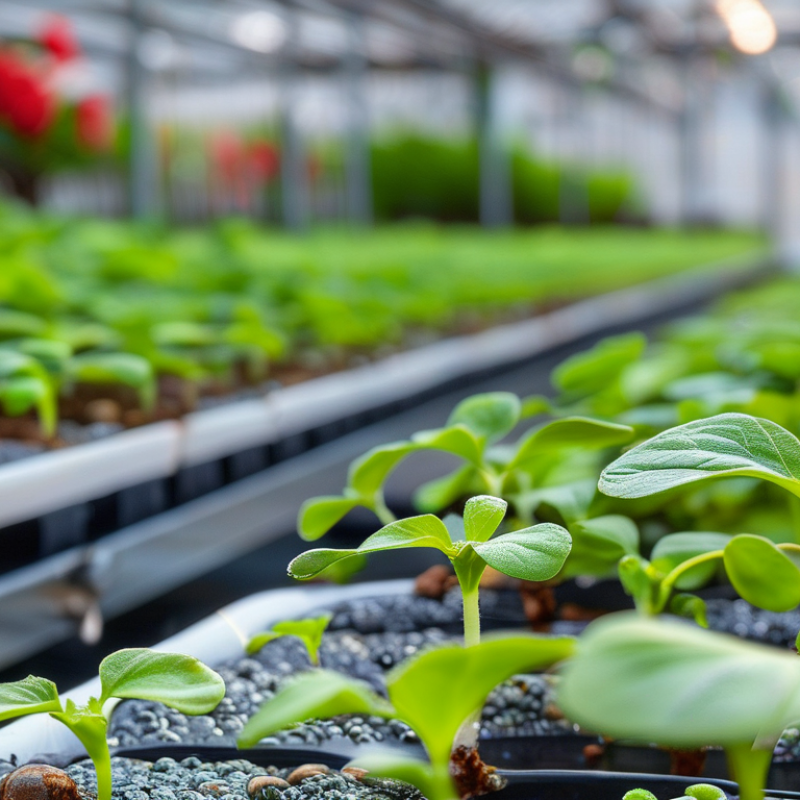
Water-soluble seedling fertilizers require precise NPK selection, stable EC, and complete dissolution. A balanced 1:1:1 ratio can support early root and leaf development. Some crops respond better to formulas with moderate nitrogen and extra phosphorus. Others need more calcium and nitrate nitrogen after transplanting. The ideal ratio depends on crop type, growing media, light, and irrigation frequency. Experienced growers should test small batches before broad application.
For young seedlings, an irrigation EC of 1.0–2.0 dS/m is a practical working range. Start near 1.0 dS/m for sensitive species or low-light conditions. Increase gradually when roots fill the plug and leaves show active growth. Measure the final solution, not only the fertilizer stock. Media salts, source-water hardness, and temperature can change readings. Too much EC may darken roots and slow water uptake. Too little may produce pale leaves and weak stems.
Solubility also separates dependable suppliers from ordinary traders. A quality product should dissolve quickly, leave minimal sediment, and maintain consistent analysis across production batches. Ask for laboratory results, NPK guarantees, trace-element details, and recommended dilution data. Check whether the powder cakes after storage. It happens more often than expected. A simple jar test with clean water can reveal floating particles or residue. I would also compare solution pH after mixing, because an acceptable EC does not guarantee nutrient availability.
| Seedling Use Profile | Typical NPK Ratio | Primary Nutritional Purpose | Reference Application Rate | Target Nutrient-Solution EC | Recommended Solution pH | Water Solubility Benchmark | Common Form | Key Supplier Specification to Verify |
|---|---|---|---|---|---|---|---|---|
| Germination and Early Emergence | 10-10-10 to 15-5-15 | Provides moderate, balanced nutrition while minimizing the risk of excessive salt concentration around newly emerged roots. | 0.5–1.0 g/L, adjusted according to crop sensitivity and irrigation-water quality. | 1.0–1.2 dS/m | 5.5–6.5 | At least 100 g/L at 20°C for a clear working solution; confirm absence of visible sediment after mixing. | Fully soluble crystalline powder or low-dust granule | Batch solubility, chloride level, raw-water compatibility, and electrical-conductivity data. |
| Vegetative Seedling Development | 15-5-15 to 20-10-20 | Supports leaf expansion and steady vegetative growth with a balanced supply of nitrogen, phosphorus, and potassium. | 0.8–1.5 g/L, depending on crop, substrate, light, and irrigation frequency. | 1.2–1.6 dS/m | 5.5–6.5 | At least 150 g/L at 20°C with rapid dissolution and no persistent residue. | Water-soluble powder or crystalline blend | Nitrate-to-ammonium nitrogen ratio, magnesium content, and trace-element availability. |
| Root Establishment and Transplanting | 10-52-10 or 12-48-8 starter type | Higher phosphorus formulations may be used for root establishment where soil or substrate testing indicates a phosphorus requirement. | 0.5–1.0 g/L; use only when phosphorus status and crop requirements justify a starter formulation. | 1.0–1.4 dS/m | 5.5–6.5 | At least 100 g/L at 20°C; phosphate compatibility should be checked in hard or alkaline water. | Fully soluble crystalline fertilizer | Phosphate source, calcium compatibility, insoluble fraction, and suitability for fertigation. |
| Low-Alkalinity Water Program | 15-5-15 with calcium and magnesium support | Helps provide a more suitable nutrient balance where irrigation water has low alkalinity and low calcium or magnesium. | 0.7–1.5 g/L, calculated from the desired nutrient concentration rather than product weight alone. | 1.2–1.7 dS/m | 5.5–6.2 | At least 150 g/L at 20°C; verify compatibility with calcium-containing water sources. | Water-soluble crystalline powder | Calcium, magnesium, sulfur, and micronutrient concentrations; acidification or alkalinity effect. |
| High-Light or Rapid-Growth Seedlings | 20-10-20 or 17-5-19 | Supplies additional nitrogen and potassium for actively growing seedlings under favorable light and temperature conditions. | 0.8–1.5 g/L, with concentration reduced during low-light or cool-weather periods. | 1.5–2.0 dS/m | 5.5–6.5 | At least 200 g/L at 20°C for concentrated stock preparation, subject to complete dissolution. | Highly soluble crystalline powder | Nitrogen form, potassium source, osmotic contribution, and crop-specific label directions. |
| Peat, Coco, or Soilless Substrate Program | 14-4-20 to 17-5-19 | Maintains nutrient availability in substrates with limited nutrient reserves and supports consistent root-zone management. | 0.6–1.3 g/L, adjusted for substrate cation-exchange capacity and the baseline EC of the irrigation water. | 1.2–1.8 dS/m | 5.5–6.2 | At least 150 g/L at 20°C; no clogging or crystallization should occur in properly prepared stock solutions. | Water-soluble powder or liquid concentrate | Compatibility with coco coir, calcium-to-potassium balance, boron level, and stock-tank stability. |
| Organic or Organomineral Seedling Feed | Typically lower and variable; commonly 3-2-3 to 6-3-6 | Provides lower-intensity nutrition from approved organic or organomineral inputs where certification and crop requirements permit. | Follow the product label; rates are not directly interchangeable with mineral fertilizer rates. | 1.0–1.5 dS/m | 5.5–6.8 | Confirm declared soluble fraction, suspension stability, filtration requirements, and storage performance. | Liquid concentrate, soluble powder, or fine suspension | Certification status, nutrient analysis method, microbial safety, odor, filtration, and shelf life. |
| Micronutrient-Enhanced Complete Feed | Balanced NPK, commonly 15-5-15 or 20-10-20 | Combines macronutrients with iron, manganese, zinc, copper, boron, and molybdenum to reduce the risk of trace-element deficiency. | 0.5–1.5 g/L, based on the total nutrient program and existing nutrient content in the water or substrate. | 1.0–1.8 dS/m | 5.5–6.5 | At least 100–150 g/L at 20°C; chelated iron stability should be confirmed at the intended pH range. | Fully soluble crystalline powder | Micronutrient forms, chelate stability, guaranteed analysis, and compatibility with other tank mixes. |
Technical note: EC is measured from the finished nutrient solution and is affected by the fertilizer dose, irrigation-water EC, temperature, and meter calibration. The listed EC ranges are practical seedling-management targets rather than fixed product properties. Solubility depends on temperature, water chemistry, formulation, and storage conditions; suppliers should provide a current technical data sheet and batch-specific analysis.