Global buyers need more than a supplier list when evaluating Calcium Nitrate. They need evidence, consistency, and practical delivery confidence. Product quality can influence fertigation performance, crop nutrition, storage stability, and operating costs. Small specification differences matter. Solubility, nitrogen content, calcium content, moisture, granule size, and trace impurities should be checked carefully.
Plant nutrition expert Patrick Brown has stated, “Calcium and nitrogen management must be considered together, not separately.” This principle helps explain why supplier selection cannot depend only on price. A reliable producer should provide a current technical data sheet, certificate of analysis, safety documentation, batch traceability, and clear packaging details. Buyers should also verify whether the material suits greenhouse systems, open-field farming, or industrial applications. The best supplier on paper may not be the best supplier for every destination.
This guide reviews 10 Best Calcium Nitrate Suppliers for Global Buyers through a practical purchasing lens. It considers manufacturing experience, product consistency, export capability, logistics, customer support, and transparent documentation. Reputation matters, but evidence matters more. Ask for recent test results. Check container loading photos. Confirm pallet protection before shipment.
No ranking is perfect.
Market conditions change. Production capacity can fluctuate, and delivery claims may require independent confirmation. Some suppliers communicate well but offer limited technical depth. Others provide strong chemistry but weak after-sales support. That is an important limitation. A careful buyer should compare several quotations, request samples where appropriate, and confirm all commercial and regulatory requirements before placing an order.

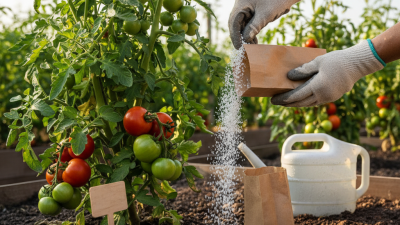
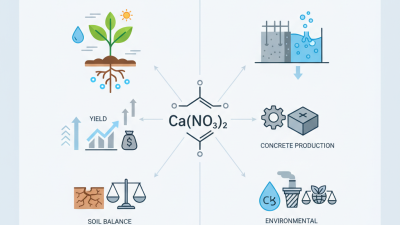
Calcium nitrate is an inorganic salt with the formula Ca(NO₃)₂. It usually appears as white granules or crystals. The material dissolves quickly in water, supplying both calcium and nitrate nitrogen. That combination makes it valuable in greenhouse fertigation, hydroponics, and open-field crop programs.
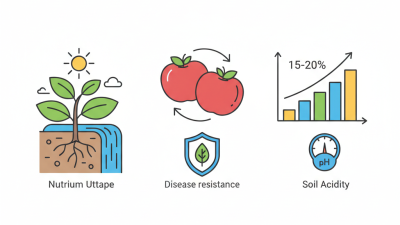
Calcium supports firm cell walls, stronger stems, and better fruit quality. Nitrate nitrogen promotes steady vegetative growth without relying on soil microbes to convert ammonium. Global buyers often need calcium nitrate because different climates create uneven nutrient conditions. A grower in a dry region may use soluble fertilizer through drip lines. A greenhouse operator may adjust small doses every morning. Small details matter.
Experienced buyers should verify assay, moisture, particle size, solubility, and packaging strength. A current certificate of analysis should match the shipped lot, not only a sales sample. Independent laboratory testing can confirm uncertain results. Buyers also need safety data sheets, origin records, and documentation required by the destination country. Import rules and fertilizer standards differ widely.
A perfect specification can still disappoint. Clogged emitters, damaged bags, or delayed customs clearance may ruin a shipment. This is where supplier communication and traceability become practical safeguards. Calcium nitrate can also react poorly with concentrated phosphate or sulfate products, so storage and mixing instructions deserve attention. It is not merely a commodity; handling conditions influence its real performance.
Calcium nitrate supplies immediately available nitrate nitrogen and calcium. The chart compares a representative commercial fertilizer specification with the theoretical elemental composition of calcium nitrate tetrahydrate, Ca(NO3)2·4H2O.
Values are percentages by mass. The commercial-grade benchmark is 15.5% total nitrogen and 19.0% calcium; the tetrahydrate values are calculated from its molecular composition. Exact specifications may vary by formulation.
When evaluating international calcium nitrate suppliers, start with product evidence, not polished promises. A reliable supplier should provide a recent certificate of analysis for each batch. Check nitrogen content, calcium content, moisture, insoluble matter, and appearance. The document should match the actual product label and shipping lot. Small details matter. Ask whether independent laboratory testing is available before a large purchase. My practical preference is a retained sample, because paperwork alone can hide inconsistent granulation or excess dust.
Production capacity also deserves close attention. Request the manufacturing location, monthly output, packaging options, and normal lead time. A dependable supplier can explain how moisture is controlled during storage and loading. Calcium nitrate may arrive in 25-kilogram bags, one-ton bulk bags, or sealed containers. Inspect the inner liner, pallet condition, and container photographs. A damaged bag can create losses before the material reaches the farm or factory. Incoterms, port experience, and customs documents should be clear in writing.
International reliability involves more than price. Review the safety data sheet, technical data sheet, origin documents, and applicable import requirements in the destination country. A supplier should answer technical questions without avoiding uncomfortable details. Slow replies can signal weak support, though not always. I would also verify references from buyers with similar order sizes. One weakness remains: online reviews are often incomplete or exaggerated. Keep payment terms, inspection rights, and claims procedures documented. A small trial order may reveal packing, communication, and consistency problems that a sales call will not show.
Global buyers should assess calcium nitrate suppliers by regional strengths, not catalog size alone. European producers often emphasize controlled purity, traceable batches, and detailed documentation for agricultural markets. Their export teams commonly provide certificates of analysis, safety data sheets, and moisture specifications. Delivery may be reliable through nearby ports, while distant freight can raise landed costs. Ask about backup production. Supply interruptions happen.
North American suppliers typically serve greenhouse operators, fertilizer blenders, and industrial water-treatment users. They often offer granular and crystalline grades, palletized bags, and bulk tanker options. Buyers should confirm nitrogen and calcium percentages, insoluble matter, and storage guidance before contracting. In East and South Asia, suppliers may provide competitive capacity and flexible packaging. Port congestion, changing export policies, and monsoon delays deserve practical attention. Cheap is not always stable.
Middle Eastern and Mediterranean suppliers can support shorter routes into Africa and southern Europe, especially for bulk agricultural orders. Latin American distributors may reduce inland complexity through regional warehouses, although available grades can vary by season. African buyers should examine warehouse ventilation, humidity control, and final-mile transport before choosing a source. A dependable supplier explains lead times clearly and accepts reasonable quality checks. Regional comparisons are useful, but they are not perfect. Trial shipments, retained samples, and independent testing can reveal differences that sales sheets miss.
| Supplier Profile | Primary Region | Common Product Form | Typical Fertilizer Analysis | Solubility at 20°C | Typical Application | Export Packaging | Common Shipping Hubs | Typical Lead-Time Range | Buyer Verification Points |
|---|---|---|---|---|---|---|---|---|---|
| Profile 01 | Western Europe | Granular calcium nitrate fertilizer | 15.5% total nitrogen Approximately 19% calcium oxide (CaO), equivalent to about 13.6% elemental calcium |
Highly soluble in water; suitable for fertigation and solution preparation | Greenhouses, open-field vegetables, fruit crops and hydroponic systems | 25 kg moisture-resistant bags; 500–1,000 kg flexible intermediate bulk containers | North Sea and Mediterranean container ports | Approximately 2–6 weeks, depending on production allocation and destination | Certificate of analysis, nitrate-nitrogen percentage, calcium calculation, particle-size distribution and REACH or equivalent compliance where applicable |
| Profile 02 | Eastern Europe | Prilled or granular calcium nitrate | 15.5% total nitrogen Commonly specified at about 19% CaO |
Readily soluble; the dissolution process is endothermic and may cool concentrated solutions | Field fertigation, protected cultivation and calcium deficiency management | 25 kg laminated polypropylene bags; bulk truck or container loading may be available | Baltic, Black Sea and Adriatic logistics corridors | Approximately 3–8 weeks | Moisture content, caking condition, chloride level, insoluble matter and transport classification documentation |
| Profile 03 | Middle East | Water-soluble crystalline or granular grade | 15.5% total nitrogen Typically marketed with approximately 19% CaO |
High water solubility; suitable for concentrated fertilizer stock solutions when compatibility is controlled | Arid-region agriculture, greenhouse production and irrigation-based crop systems | 25 kg bags and 1,000 kg bulk bags with polyethylene liners | Persian Gulf container and bulk terminals | Approximately 3–7 weeks | Product origin, batch analysis, anti-caking treatment, storage conditions and compatibility guidance for phosphate fertilizers |
| Profile 04 | North Africa | Granular fertilizer grade | 15.5% total nitrogen Approximately 19% CaO; nitrate-nitrogen is the principal nitrogen form |
Readily soluble in irrigation water | Vegetables, citrus, berries, vineyards and saline or calcium-sensitive soils | 25 kg woven bags with inner liners; palletized export units | Mediterranean and Atlantic ports | Approximately 3–9 weeks | Granule strength, dust level, net weight, pallet configuration and conformity with the importing country’s fertilizer rules |
| Profile 05 | East Asia | Technical or fertilizer-grade crystals and granules | Fertilizer grade commonly: 15.5% N and about 19% CaO Technical grades may use different assay specifications |
Very soluble in water; exact dissolution rate depends on particle size and temperature | Fertigation, industrial nutrient solutions and specialty agricultural formulations | 25 kg bags, 500 kg bags and 1,000 kg flexible intermediate bulk containers | Major Northeast Asian container ports | Approximately 2–7 weeks | Grade designation, assay basis, heavy-metal limits, SDS, certificate of analysis and product-use restrictions |
| Profile 06 | South Asia | Water-soluble granular calcium nitrate | 15.5% total nitrogen Usually listed with approximately 19% CaO |
High solubility for drip irrigation and foliar-feed preparation | Rice, vegetables, protected cultivation, orchards and nursery production | 25 kg retail or commercial bags; 500 kg and 1,000 kg bulk bags | Indian Ocean and Bay of Bengal ports | Approximately 3–8 weeks | Fertilizer registration, import permit requirements, batch traceability, bag marking and local-language labeling |
| Profile 07 | Southeast Asia | Granular or crystalline fertigation grade | 15.5% N and approximately 19% CaO Low chloride specifications are often requested for sensitive crops |
Readily soluble in ambient-temperature water | Tropical horticulture, bananas, vegetables, flowers and hydroponic cultivation | 25 kg laminated bags; moisture-protected palletized shipments | Strait of Malacca and regional container ports | Approximately 2–6 weeks | Chloride and sodium levels, moisture resistance, granule integrity, shelf-life statement and container ventilation requirements |
| Profile 08 | North America | Fertilizer-grade granules and water-soluble crystals | Common agricultural grade: 15.5% N and about 19% CaO Specialty grades may have separate specifications |
Highly soluble; suitable for fertigation when mixed according to manufacturer guidance | High-value crops, greenhouse systems, turf and commercial irrigation programs | 25 kg bags, supersacks and bulk delivery depending on order size | Gulf, Atlantic, Pacific and Great Lakes logistics networks | Approximately 2–8 weeks for international supply | U.S. or Canadian fertilizer registration, SDS, hazard communication labeling, lot number and transport documentation |
| Profile 09 | Latin America | Granular agricultural grade | 15.5% total nitrogen Typically declared at approximately 19% CaO |
Readily soluble and compatible with many irrigation programs when tank-mixing rules are followed | Coffee, fruit, sugarcane, vegetables and protected agriculture | 25 kg bags, 500 kg bags and 1,000 kg flexible intermediate bulk containers | Atlantic and Pacific container ports | Approximately 4–10 weeks | Country-specific fertilizer registration, Spanish or Portuguese labeling, customs documents and crop-use recommendations |
| Profile 10 | Oceania | High-purity soluble granules or crystals | 15.5% N and approximately 19% CaO Higher-purity technical specifications may be available on request |
Highly soluble; storage should minimize humidity exposure and temperature cycling | Horticulture, greenhouse crops, vineyards, turf and specialty nutrient programs | 25 kg bags and 1,000 kg bulk bags; sealed liners recommended for long transit | Australian and New Zealand container ports | Approximately 4–10 weeks | Biosecurity and import requirements, product registration, moisture specification, country of origin and batch-specific analysis |
Reliable calcium nitrate suppliers should prove quality with measurable data, not polished sales language. Ask for a recent certificate of analysis covering nitrogen, calcium, moisture, insoluble matter, and particle size. Batch numbers should match the bags and shipping documents. That simple check prevents costly confusion.
Certifications also need careful review. ISO 9001 can indicate controlled processes, while product safety documents should include an accurate SDS and current regulatory information. Requirements differ by destination, so export teams must verify local fertilizer rules before shipment. Packaging deserves equal attention. Moisture-resistant woven bags with inner liners can reduce caking during humid ocean transport. Common options include 25-kilogram bags, 50-kilogram bags, and one-ton bulk bags on treated pallets.
Export support often separates experienced suppliers from ordinary traders. A capable team should prepare the commercial invoice, packing list, certificate of origin, certificate of analysis, SDS, and correct HS classification. They should also explain loading photos, seal numbers, lead times, and storage conditions. Small details matter. Ask whether damaged bags are replaced, and how complaints are investigated. No supplier gets every shipment perfect. A delayed response or vague answer is a warning, even when the price looks attractive. Compare samples, documents, packaging strength, and communication before placing a large order.
Selecting among the 10 best calcium nitrate suppliers requires more than comparing prices. Match the supplier’s product grade to your application, climate, and local requirements. Agricultural buyers may need consistent granule size and fast dissolution. Industrial users often require tighter purity controls. Ask for a recent certificate of analysis, safety data sheet, and batch traceability records. Documents matter.
Evaluate production capacity before signing a large contract. A supplier should explain monthly output, lead times, packaging options, and storage conditions. Moisture-resistant bags can prevent caking during humid ocean transport. Request a representative sample, then test solubility, calcium content, nitrate content, and insoluble matter through an independent laboratory. One sample is not enough.
Reliable suppliers communicate clearly when specifications change. They should identify the manufacturing site, quality-control process, and corrective-action procedure. Check whether their export documents fit your destination market. Product classification, labeling, and transport rules can differ significantly between countries. A low quotation may hide weak packaging or uncertain delivery schedules. I have seen buyers focus on unit cost and overlook port delays. That mistake becomes expensive. No checklist is perfect. Reassess the supplier after each shipment, especially when color, particle size, or delivery performance shifts. Ask uncomfortable questions early.Winvalid