Leave Your Message

China Best Water Soluble Granular Fertilizer Manufacturer

Choosing a China Best Water Soluble Granular Fertilizer Manufacturer requires more than comparing prices or attractive packaging. Farmers need consistent nutrition, clean dissolution, and dependable delivery. Water Soluble Granular Fertilizer should dissolve evenly in irrigation systems, fertigation tanks, or carefully prepared watering cans. Small details matter.

A professional manufacturer should show practical experience across crop types, soil conditions, and application methods. Its technical team should understand nitrogen, phosphorus, potassium, and trace element compatibility. Factory quality control should cover raw material inspection, nutrient testing, granule strength, moisture levels, and solubility. Clear product specifications help growers select suitable grades for vegetables, fruit trees, field crops, and ornamental plants. Samples and laboratory reports also provide stronger evidence than broad marketing claims.

No supplier is perfect. A formula designed for rapid growth may not suit every soil or climate. Humidity can affect storage, even when packaging looks secure. Experienced manufacturers acknowledge these limitations and offer realistic guidance. They may recommend jar tests, small field trials, or adjusted application rates before large-scale use. That honesty builds trust.

This introduction explores how to evaluate Chinese fertilizer manufacturers through formulation expertise, production standards, documentation, and customer support. It also considers private labeling, packaging options, export coordination, and after-sales communication. A dependable partner should answer technical questions clearly and respond when field conditions change. The best choice is not always the cheapest one. It is the supplier that combines measurable quality, responsible advice, and stable performance from factory to farm.
China Best Water Soluble Granular Fertilizer Manufacturer

What Is Water-Soluble Granular Fertilizer?

China Best Water Soluble Granular Fertilizer Manufacturer

What Is Water-Soluble Granular Fertilizer?

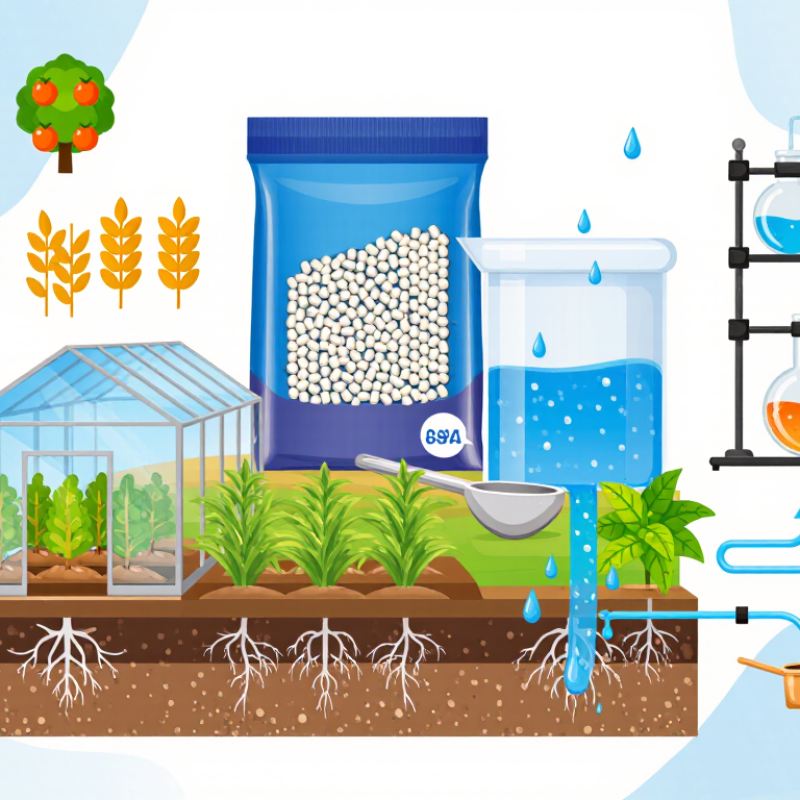
Water-soluble granular fertilizer is a dry fertilizer designed to dissolve in water before application. Its granules contain concentrated nutrients, such as nitrogen, phosphorus, potassium, and trace elements. Unlike ordinary granular fertilizer, it should leave little or no solid residue after mixing. This feature supports fertigation, greenhouse irrigation, and carefully measured field feeding.

A reliable product should dissolve quickly in clean water at the recommended temperature. Farmers should check the nutrient analysis, moisture level, granule strength, and dissolution time. Poorly produced granules may cake during storage or block filters. That problem is easy to underestimate. In practical use, even a small amount of residue can affect drip irrigation and unevenly feed plants. Application results also depend on water hardness, crop needs, and mixing order. More fertilizer is not always better; excessive concentration can damage roots.

Tips: Test a small batch first. Add granules slowly to water while stirring. Use a mesh filter before fertigation. Keep unopened bags dry and sealed. Record the mixing rate and crop response. A simple log can reveal whether the product truly performs well. Manufacturer testing should include solubility, nutrient uniformity, packaging quality, and batch traceability. These details help buyers compare suppliers in China with greater confidence. Still, field conditions vary, so laboratory results should be checked against real crop performance.
How Water-Soluble Granular Fertilizers Are Formulated and Produced

Water-soluble granular fertilizer starts with a precise nutrient target, not a simple mixing step. Manufacturers select soluble nitrogen, phosphate, potassium, and micronutrient sources according to crop needs and irrigation water quality. The International Fertilizer Association’s 2024 medium-term outlook expects global fertilizer demand to approach 205 million tonnes of nutrients by 2028. That pressure makes efficient formulation increasingly important.

In a modern Chinese production facility, raw materials are weighed, blended, and conditioned with controlled moisture. A granulator then forms uniform particles, often between 2 and 4 millimeters. Hot air removes excess moisture. Screens separate oversized and undersized granules. Rejected material returns to the process. Small details matter. Uneven particle size can cause segregation during transport and inaccurate field application.

Quality teams test dissolution time, nutrient uniformity, moisture, crushing strength, and storage stability. The FAO’s fertilizer quality guidance emphasizes reliable nutrient analysis and clear product specifications. Solubility tests should also use realistic water temperatures and hardness, not only laboratory-grade water. That is where some formulas disappoint. A product may dissolve quickly in clean water but leave residue in alkaline irrigation systems. Coatings, anti-caking agents, and packaging must therefore match the final application method. Production records, laboratory calibration, and batch traceability support consistent results, although no formulation remains perfect under every field condition.

Key Benefits and Agricultural Applications

China Best Water Soluble Granular Fertilizer Manufacturer

Water-soluble granular fertilizers combine concentrated nutrients with practical handling. Unlike liquids, dry granules are easier to store, transport, and measure on many farms. When mixed with clean water, they support fertigation or carefully timed soil application. Their main benefit is control. Growers can adjust rates by crop stage, soil test, and irrigation volume. This approach may reduce nutrient losses, but only when dosing equipment is calibrated and water quality is checked. Hard water can cause precipitation. That detail is often overlooked.

Professional use begins with crop requirements, not product volume. Agronomists often recommend balanced formulas for vegetables, grains, fruit trees, and greenhouse crops. Nitrogen can support leafy growth, while phosphorus and potassium assist roots, flowering, fruit quality, and stress tolerance. Micronutrients may help correct specific deficiencies, but unnecessary applications can increase costs and disturb nutrient balance. Farmers should follow verified technical data, local regulations, and label instructions.

In open fields, dissolved granules can be applied through irrigation systems after testing compatibility. In orchards, targeted root-zone feeding may reduce distribution across unused soil. Greenhouse growers can make smaller adjustments during rapid growth or fruit production. Results depend on timing, moisture, temperature, and soil condition. A higher rate is not always better. Small field trials are wise, because real soils rarely behave exactly like recommendations. calc.

China Best Water Soluble Granular Fertilizer Manufacturer - Key Benefits and Agricultural Applications
Water-Soluble Granular Fertilizer Typical Nutrient Analysis Typical Solubility at 20°C Key Agricultural Benefits Suitable Crops and Applications Important Application Considerations
Urea 46-0-0
46% nitrogen
Approximately 545 g/L of water Provides a highly concentrated nitrogen source that supports vegetative growth, leaf development, and crop biomass production. Cereals, maize, cotton, oilseed crops, vegetables, fruit trees, and general soil fertilization. Incorporation into soil or timely irrigation can reduce ammonia losses, especially when applied to alkaline or warm soils.
Monoammonium Phosphate (MAP) Typically 12-61-0
Nitrogen and phosphorus
Approximately 370 g/L of water Supplies readily available phosphorus for root establishment, early growth, flowering, and energy transfer within plants. Seedling production, cereals, legumes, vegetables, fruit crops, and fertigation programs. Generally compatible with many fertilizer programs, but jar testing is recommended before mixing with calcium-containing products.
Monopotassium Phosphate (MKP) Typically 0-52-34
Phosphate and potassium
Approximately 225 g/L of water Provides phosphorus and potassium without adding nitrogen, supporting flowering, fruit development, crop quality, and stress management. Horticultural crops, vegetables, grapes, fruit trees, ornamentals, and greenhouse fertigation. Useful during reproductive growth or when nitrogen input needs to be limited; avoid concentrated mixtures with calcium or magnesium salts.
Potassium Nitrate Typically 13-0-46
Nitrate nitrogen and potassium
Approximately 316 g/L of water Delivers immediately available nitrate nitrogen and potassium, helping support yield, fruit size, sugar accumulation, and quality. Vegetables, berries, fruit trees, tobacco, greenhouse crops, and fertigation systems. Chloride-free and suitable for chloride-sensitive crops; application rates should reflect soil potassium levels and crop demand.
Potassium Sulfate (SOP) Typically 0-0-50
Approximately 17% sulfur
Approximately 100 g/L of water Provides potassium and sulfur while avoiding chloride, supporting crop quality, enzyme activity, and sulfur nutrition. Fruit trees, vegetables, potatoes, tobacco, ornamental crops, and chloride-sensitive crops. Lower solubility than potassium nitrate requires proper tank mixing, filtration, and sufficient irrigation time in fertigation systems.
Calcium Nitrate Typically 15.5% total nitrogen
Approximately 19% calcium
Approximately 1,200 g/L of water Supplies nitrate nitrogen and soluble calcium, supporting cell-wall strength, firmness, and the prevention of calcium-related disorders. Tomatoes, peppers, leafy vegetables, apples, melons, berries, greenhouse crops, and hydroponic systems. Keep separate from concentrated phosphate or sulfate fertilizers in stock tanks to prevent precipitation and blocked emitters.
Magnesium Sulfate Commonly 9.8% magnesium
Approximately 13% sulfur
Approximately 700 g/L of water Corrects magnesium and sulfur deficiencies; magnesium is central to chlorophyll formation and photosynthesis. Vegetables, fruit trees, ornamentals, greenhouse crops, and crops grown in magnesium-deficient soils. Use soil or tissue testing to confirm deficiency, since excessive magnesium may interfere with calcium and potassium balance.
Nutrient analysis and solubility values are typical commercial specifications and may vary by grade, manufacturing process, temperature, and water quality. Always follow local agronomic recommendations, crop requirements, and compatibility guidance before application.

How to Evaluate a Chinese Fertilizer Manufacturer

Choosing the best water soluble granular fertilizer manufacturer in China requires evidence, not attractive claims. A polished website proves little. For soluble fertilizer, inspect production records, quality controls, and technical documents. Ask for factory registration, production qualifications, recent certificates of analysis, and export experience. Compare the stated nutrient content with independent laboratory results. Request samples from several batches. Uneven granules may indicate weak screening or poor moisture control.

Test each sample in clean water at the recommended concentration. Observe dissolution time, sediment, odor, and solution clarity. Record the water temperature and mixing method. A reliable manufacturer should explain raw material sources, granulation procedures, and contamination controls clearly. Traceable batch numbers are essential when a field problem appears later. Technical staff should understand crop stages, application rates, and compatibility with irrigation systems, rather than simply repeat a sales sheet.

Commercial reliability needs equal attention. Review minimum order quantities, packaging strength, lead times, and responses to quality complaints. Ask for a small trial order before signing a large contract. In practical sourcing, this step often reveals more than a factory tour. Some suppliers answer quickly but avoid difficult questions. That is a warning. No manufacturer is perfect, and one unclear specification can be overlooked during busy purchasing. Write every requirement into the product specification, including granule size, moisture limits, labeling, and inspection procedures.

Quality Standards, Customization, and Export Services

A reliable water soluble granular fertilizer manufacturer begins with measurable quality standards. Each batch should be checked for nutrient content, moisture, particle size, and dissolution time. In practice, a simple water test can reveal uneven granules or residue. That detail matters.

Experienced production teams use calibrated mixers, controlled drying, and clean packing lines. Samples should be retained for traceability. A batch code, production date, and certificate of analysis help buyers verify each shipment. However, testing is not perfect. Sampling errors can happen, so regular process reviews remain necessary. Quality should be demonstrated, not merely promised.

Customization supports different crops, climates, and application systems. Formula options may include balanced NPK ratios, added micronutrients, or crop-specific nutrient levels. Granule size can also be adjusted for manual spreading or fertigation. Packaging may range from moisture-resistant bags to palletized export units. Clear labels should show net weight, nutrient analysis, storage conditions, and application guidance.

Export service requires careful coordination. Manufacturers should prepare commercial invoices, packing lists, certificates of origin, and safety documents when required. Packaging must withstand humid warehouses and long sea transport. A practical supplier confirms destination regulations before production, rather than correcting documents later. Communication can still fail. Therefore, written specifications, pre-shipment photos, and sample approval reduce avoidable disputes. Reliable service is built through records, responsive updates, and consistent delivery performance.

China Best Water Soluble Granular Fertilizer Manufacturer - Quality Standards, Customization, and Export Services

Reference NPK profiles commonly used when customizing fully water-soluble granular fertilizers for different crops and growth stages.

The values represent nutrient percentages by mass in standard N-P₂O₅-K₂O grade notation. Balanced 20-20-20 supports general-purpose feeding, while higher-phosphorus or higher-potassium profiles are commonly selected for rooting, flowering, fruit development, and crop-specific programs. Final quality verification should include nutrient analysis, solubility, moisture, particle-size uniformity, packaging, and destination-market compliance.