Leave Your Message

How to Choose Water Soluble Magnesium Fertilizer

Choosing a Water Soluble Magnesium Fertilizer requires more than comparing percentages on a label. Magnesium supports chlorophyll formation, enzyme activity, and efficient photosynthesis. When supplies decline, older leaves may show yellowing between green veins. The symptom is visible, but the cause may not be simple.

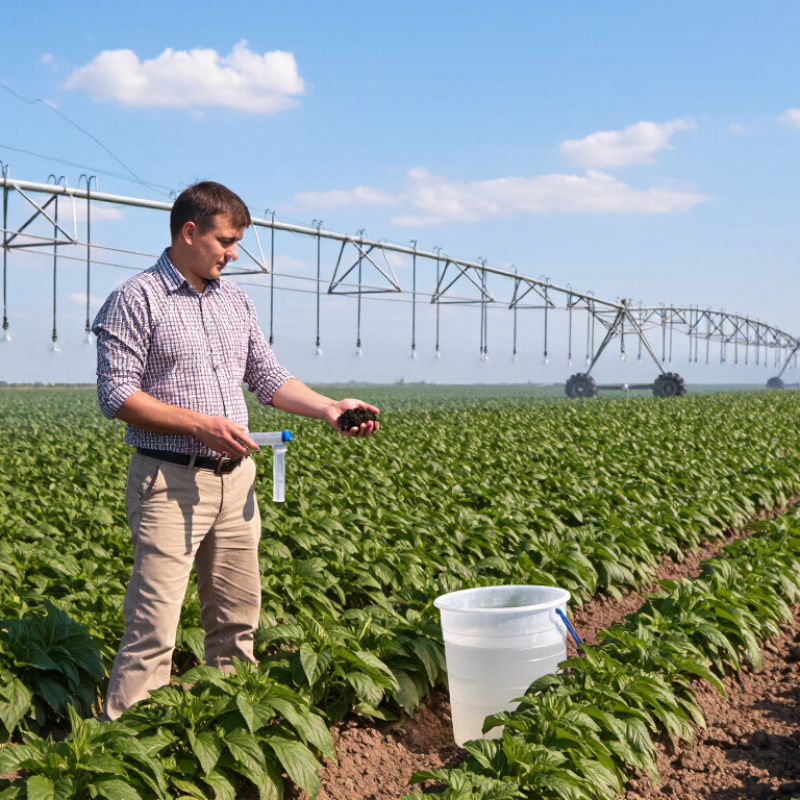
Dr. Robert Mikkelsen, a respected soil fertility specialist, has said, “The best fertilizer decision begins with a soil test.” That principle remains practical in the field. Test soil pH, electrical conductivity, magnesium levels, and water quality before selecting a product. Hard irrigation water can affect mixing and reduce application consistency. A fertilizer that dissolves clearly in a bucket may still perform poorly in a concentrated tank.

Farm managers should compare magnesium concentration, solubility, application method, and crop sensitivity. Magnesium sulfate often suits fertigation and foliar programs, while other formulations may fit specific soil conditions. Check whether the product contains chloride, nitrate, or sulfate. Those accompanying ions can influence salinity and nutrient balance.

Small details matter. Watch for sediment at the tank bottom. Inspect leaves after application. Measure the final solution, not only the label promise.

There is no perfect formula.

A strong recommendation should match the crop, soil, irrigation system, and growth stage. Even careful decisions can miss a hidden problem, such as restricted roots or excessive potassium. That uncertainty deserves attention. Reliable use of Water Soluble Magnesium Fertilizer depends on testing, clean records, and adjustments based on real field results.
How to Choose Water Soluble Magnesium Fertilizer

Understanding Water-Soluble Magnesium Fertilizer

Understanding Water-Soluble Magnesium Fertilizer

Water-soluble magnesium fertilizer dissolves in irrigation water and supplies magnesium to plant roots quickly. Magnesium sits at the center of each chlorophyll molecule. Without enough magnesium, older leaves may develop pale areas between green veins. This symptom can resemble nitrogen deficiency, so visual judgment alone can mislead growers. A soil or tissue test gives a more reliable starting point.

The fertilizer’s chemical form affects how it performs. Magnesium sulfate dissolves readily and also supplies sulfur. Magnesium nitrate provides nitrate nitrogen, which may be useful during active growth. Chelated magnesium can support foliar applications, but its value depends on the product’s stability and crop response. Check the guaranteed analysis, solubility, and solution pH before purchase. Small details matter.

Use clean water and dissolve the material completely in a separate container. Then add it to the irrigation tank with steady mixing. Hard water, concentrated phosphate solutions, or alkaline conditions may create unwanted deposits. A jar test can reveal compatibility problems before they block emitters. Apply a modest trial area and inspect new leaves after several days. More fertilizer is not always better. I have seen growers react to yellow leaves too quickly, while the real issue was poor roots or excessive watering. Keep application records, because memory becomes unreliable across changing weather and fields.

Assessing Soil and Crop Magnesium Requirements

How to Choose Water Soluble Magnesium Fertilizer

Assessing Soil and Crop Magnesium Requirements

When choosing a water soluble magnesium fertilizer, begin with the field, not the bag. Collect soil from the active root zone, usually 0–20 centimeters deep. Test pH, cation exchange capacity, exchangeable magnesium, calcium, and potassium. Some university soil-test guides classify exchangeable magnesium below 50 ppm as low, but extraction methods are not interchangeable. Soil texture matters. Sandy soils can lose magnesium quickly after heavy rainfall.

Crop testing adds useful evidence. International Plant Nutrition Institute guidance commonly places adequate magnesium near 0.15–0.35% of mature leaf dry matter. The range changes with crop and laboratory method. Sample the correct leaf at the recommended growth stage. Yellowing between older leaf veins may indicate deficiency, yet potassium competition or root damage can look similar. A fast visual diagnosis can be wrong.

Tips: Compare soil and tissue results before applying soluble magnesium. Choose a fertilizer that matches the test, crop stage, irrigation system, and water quality. High calcium or potassium may reduce magnesium uptake. Dissolve a small sample first; cloudy water or sediment deserves investigation. Use the 4R principle—right source, rate, time, and place—supported by International Fertilizer Association nutrient-management guidance. I still recheck results after correction. One test rarely explains an entire field.

How to Choose Water Soluble Magnesium Fertilizer - Assessing Soil and Crop Magnesium Requirements

Assessment Dimension Typical Benchmark or Data Range What the Result Indicates Water-Soluble Magnesium Fertilizer Consideration
Soil exchangeable magnesium Approx. <0.25 cmolc/kg: low; 0.25–0.50 cmolc/kg: marginal; >0.50 cmolc/kg: generally adequate. Low or marginal values suggest a greater probability of magnesium deficiency, especially in sandy or acidic soils. Use a soluble source when magnesium is needed quickly. Interpret results according to the local soil-testing laboratory and extraction method.
Magnesium saturation of cation exchange capacity Less than approximately 10% may indicate a potential magnesium supply problem; commonly adequate values are often around 10–20%. A low percentage means magnesium occupies a relatively small share of the soil's exchange sites. Prioritize a magnesium fertilizer when both saturation and exchangeable magnesium are low. Avoid using saturation alone as the decision criterion.
Soil texture and drainage Coarse-textured, low-organic-matter soils generally retain fewer exchangeable nutrients and are more prone to magnesium leaching. Magnesium deficiency risk is increased where rainfall or irrigation causes substantial drainage. Choose a readily soluble product for fertigation or split applications. Smaller, repeated doses can reduce losses compared with one large application.
Soil pH and liming requirement Soil pH below approximately 5.5 can increase aluminum and manganese availability and restrict root growth; target pH depends on crop and soil type. Low pH may reduce effective magnesium uptake even when some magnesium is present. If both pH and magnesium are low, a magnesium-containing liming material may be more appropriate for correction. Use a fully soluble fertilizer when immediate crop uptake is the priority.
Potassium status and K:Mg balance Excessive potassium applications can suppress magnesium uptake through cation competition, particularly on light soils. A crop may show magnesium deficiency despite a moderate soil magnesium test if potassium supply is excessive. Review potassium rates before adding magnesium. A fertilizer containing magnesium but little or no potassium may be preferable where soil potassium is already high.
Crop magnesium removal Representative total removal ranges: wheat 5–10 kg Mg/ha, maize grain systems 8–15 kg Mg/ha, soybean 15–25 kg Mg/ha, and potato 10–20 kg Mg/ha, depending on yield and residue removal. Higher-yielding crops and removal of straw, stover, or vines can increase the annual magnesium replacement requirement. Use crop removal as a maintenance estimate, but increase or decrease the rate based on soil-test results, tissue analysis, yield target, and expected losses.
Leaf tissue magnesium concentration Critical values vary by crop and growth stage; many diagnostic programs consider approximately 0.15–0.25% Mg in mature leaf tissue to be a deficiency-risk range. Low tissue magnesium confirms that plant uptake is insufficient at the sampled stage, but interpretation must be crop-specific. Use foliar or fertigation applications only as corrective tools when rapid response is needed; maintain adequate root-zone magnesium for longer-term supply.
Magnesium sulfate heptahydrate Approximately 9.8% Mg and 13% sulfur by mass; highly soluble in water. Provides rapidly available magnesium together with sulfur, without adding nitrogen or potassium. Suitable for fertigation, greenhouse production, and foliar programs where sulfur is also useful. To supply 20 kg Mg/ha, approximately 204 kg product/ha is required.
Magnesium nitrate Commercial water-soluble grades commonly contain about 9.5–10.5% Mg and 10–11% nitrogen; the exact analysis must be confirmed on the product label. Provides fast magnesium and nitrogen, which can be useful during active vegetative growth. Select only when additional nitrogen is agronomically appropriate. Avoid unnecessary nitrogen late in the season or in crops with excessive vegetative growth.
Potassium magnesium sulfate Typical analyses are approximately 10–11% Mg, 21–22% K2O, and 21–22% sulfur; solubility is lower than magnesium sulfate and varies by grade. Supplies magnesium, potassium, and sulfur in one fertilizer. Useful where both potassium and magnesium are required. Avoid or reduce the rate where soil potassium is already sufficient or excessive.
Required magnesium rate calculation Fertilizer rate = required Mg ÷ magnesium fraction in the fertilizer. For example, 30 kg Mg/ha ÷ 0.098 = approximately 306 kg magnesium sulfate heptahydrate/ha. Calculate rates from the guaranteed Mg analysis, not from the fertilizer name. Convert kg/ha to lb/acre by multiplying by 0.893.
Application method and timing Root-zone applications build soil supply; fertigation and foliar applications provide faster access but usually have a shorter residual effect. The best method depends on deficiency severity, crop growth stage, irrigation system, and soil moisture. Apply before peak crop demand where possible. Use split fertigation doses on sandy soils and follow crop-specific foliar concentration and compatibility guidance.
Water quality and tank compatibility Hard or alkaline irrigation water may contain calcium, bicarbonate, or carbonate that can contribute to precipitation with incompatible fertilizers. Poor compatibility can cause clogged emitters, uneven application, or reduced nutrient availability. Check solubility, perform a jar test, and avoid mixing concentrated magnesium solutions with phosphate or carbonate products unless compatibility is confirmed.

Note: Soil-test interpretation, tissue sufficiency ranges, crop removal, and fertilizer rates vary with crop, yield level, soil-test extractant, climate, irrigation, and local recommendations. Use the values above as screening benchmarks and confirm final rates with a qualified soil or crop adviser.

Comparing Magnesium Fertilizer Types and Solubility

Choosing a water-soluble magnesium fertilizer starts with the water, not the bag. Magnesium nitrate and magnesium sulfate dissolve rapidly, while dolomite and magnesium oxide release nutrients far more slowly. USDA NRCS nutrient-management guidance separates soluble salts from liming materials because reaction speed changes placement and availability (USDA NRCS, 2023). That distinction matters in fertigation. Clear stock solution is essential.

Technical data sheets report magnesium nitrate hexahydrate solubility near 1,250 g/L at 20°C, although temperature and purity alter results. Magnesium sulfate heptahydrate is commonly listed near 700 g/L at 20°C (European Chemicals Agency substance dossiers, 2024). These figures look impressive. Yet concentrated solutions can cool, crystallize, or react with calcium-rich water. FAO fertigation guidance stresses water quality, compatibility, and application timing, not solubility alone (FAO, Fertilizers and Their Use).

For leafy crops with an immediate deficiency, nitrate or sulfate may provide faster correction. Choose sulfate when nitrate nitrogen is undesirable. Choose nitrate when soluble nitrogen is useful. Dolomitic materials suit gradual magnesium and pH correction in soil-based programs. Before buying, test irrigation water, jar-test the blend, and verify guaranteed magnesium on the label. That practical step is easy to skip. My own comparison would record sediment after 24 hours, not only initial clarity. Field conditions are messier than laboratory tables.

Selecting the Right Product for Application Conditions

Choosing a water-soluble magnesium fertilizer starts with the application method, not the product label.

In fertigation, solubility must remain stable from the mixing tank to the last emitter. Check irrigation water for pH, hardness, bicarbonate, and electrical conductivity. A fertilizer may dissolve clearly, yet cause problems after mixing. Magnesium sulfate often suits routine fertigation, while magnesium nitrate may help crops that also need nitrate nitrogen. Keep chloride sensitivity in mind.

Crop stage also changes the decision. Young plants may need a gentle, low-salt solution, while fruiting crops can remove magnesium quickly. Soil and leaf tests are more dependable than pale leaves alone. Yellowing between veins can indicate magnesium shortage, but root stress and poor drainage may look similar.

I prefer a small jar test before preparing a full tank. Mix the intended fertilizers in the same water, wait, and inspect for cloudiness or sediment. It is a simple check. Still, it cannot replace a proper compatibility review.

For foliar use, select a fully soluble material with low impurity risk. Follow the approved label rate carefully. Spray during cooler hours, using clean water and adequate leaf coverage. Avoid combining magnesium with materials that may precipitate with sulfates or phosphates. Confirm compatibility first.

Filters should be checked after application, not only before it. My field notes show that overcorrecting a deficiency can raise salinity faster than expected. Not always predictably.

Recheck tissue status and irrigation runoff before repeating treatment. Conditions change quickly in greenhouses.

Applying Magnesium Fertilizer Safely and Effectively

Choose water-soluble magnesium fertilizer from test results, not label claims. A soil test should confirm magnesium levels, pH, salinity, and potassium balance. High potassium can suppress magnesium uptake. Leaf analysis adds useful evidence, especially when plants show yellowing between older leaf veins. However, root damage or drought can create similar symptoms. I have misread that pattern before.

Compare elemental magnesium, not total product weight. Magnesium sulfate usually dissolves quickly, while potassium magnesium sulfate also supplies potassium. Check chloride, sodium, moisture, and contaminant limits. A 10-kilogram product containing 10% magnesium supplies 1 kilogram of magnesium before field losses. Use clean water and a calibrated sprayer. Wear gloves, eye protection, and suitable work clothing. Keep concentrate away from skin and waterways. Small-scale jar tests can reveal clogging or sediment before field application.

Apply during cool, low-wind conditions. Avoid spraying drought-stressed plants or hot leaves. Split soil applications can reduce salt concentration around roots. Follow the registered label and local agricultural guidance. FAO’s World Food and Agriculture Statistical Yearbook 2023 reported roughly 185 million tonnes of fertilizer nutrients were used globally in 2021. That scale makes careful nutrient accounting important. USDA soil-management guidance also emphasizes testing before amendment. Still, test results are not perfect; retesting after application may challenge the first decision.