How to Use Water Soluble Orchid Fertilizer?
Water Soluble Orchid Fertilizer can support steady growth, but a stronger mix does not mean better results. Orchids have delicate roots. A small measuring spoon, clean water, and a clear label matter more than a complicated schedule.
Orchid nutrition researcher Dr. Yin-Tung Wang has studied how growing conditions affect orchid development. I cannot verify a direct quotation from him about fertilizer, so I will not put invented words in his mouth. A useful grower’s maxim is “weekly, weakly.” Treat it as a cautious starting point, not a rule for every plant. A thirsty Phalaenopsis in bark may need a different routine from an orchid growing in moss.
This guide explains how to read a water-soluble fertilizer label, calculate a gentle dilution, and apply the solution without leaving concentrated salts around the roots. You will also learn when plain water is useful, how to avoid feeding a dry root system, and what signs to check after application. Look for firm roots, active growth, and leaves that remain healthy. Brown tips can have several causes, so fertilizer is not always to blame. That uncertainty is worth remembering. Start conservatively, observe the plant, and adjust only when its response gives you a reason.
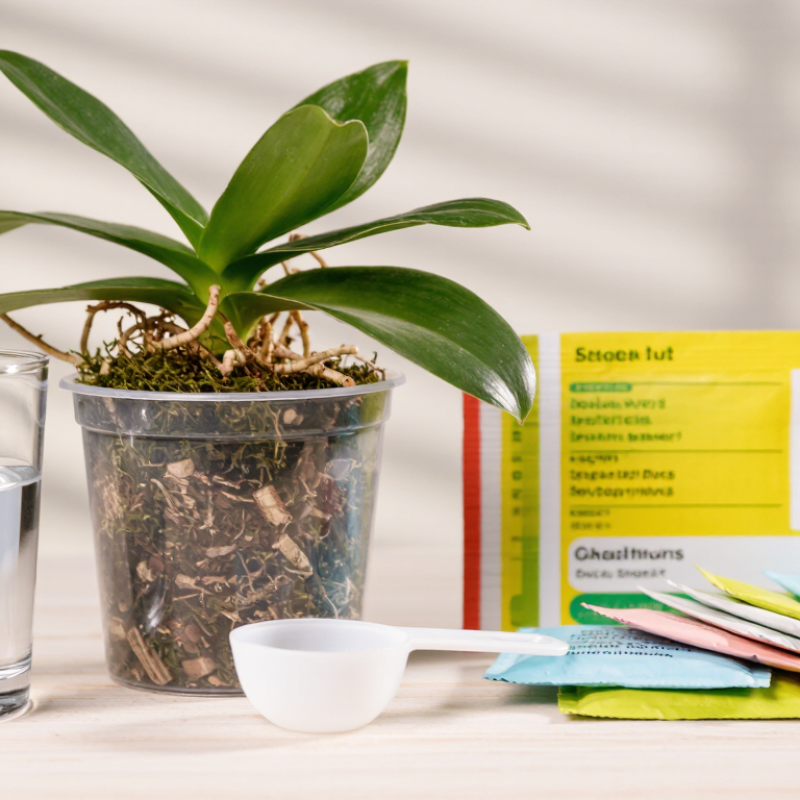
Choose a Water-Soluble Formula Suited to the Orchid’s Growth Stage
Choose a water-soluble fertilizer by watching the orchid, not the calendar.
When new leaves or root tips appear, a balanced formula can support steady growth. For Phalaenopsis, American Orchid Society guidance favors “weakly, weekly” feeding; a cautious starting point is one-quarter of the label rate. Mix it fully, then apply to already-moist roots. Dry roots can be damaged by concentrated salts.
Flowering does not automatically call for a high-phosphorus “bloom” formula. University of Florida IFAS Extension guidance emphasizes regular, dilute feeding and periodic flushing to limit fertilizer salt buildup. In coarse bark, nutrients wash through quickly; in moisture-holding moss, they linger longer, so reduce concentration or frequency. Flush the pot with plain water about monthly, especially if a pale crust forms on the bark or pot. When growth slows, cut back feeding; resume as fresh roots emerge. That judgment is imperfect: indoor light and temperature can shift growth stages, so check the roots before changing the mix.
Dilute Fertilizer to One-Quarter of the Label Strength
Diluting orchid fertilizer to one-quarter of the label strength gives roots a gentler nutrient dose.
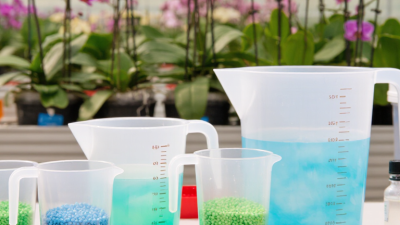
If the label calls for 4 milliliters per liter, mix 1 milliliter per liter instead. Measure carefully; a kitchen spoon can make small doses surprisingly inaccurate. The American Orchid Society’s fertilizing guidance favors regular, weak feeding and describes quarter- to half-strength applications as a common approach. That is useful guidance, not a guarantee for every orchid or growing medium.
Apply the solution to already-moist potting bark, not to bone-dry roots. Water should drain freely through the pot. Once a month, flush the medium with plain water to help wash away accumulated fertilizer salts, as orchid-care guidance from the American Orchid Society advises. Watch leaf tips and roots: brown tips or a pale crust on the bark can signal excess salts, though they can have other causes too. I would check the label again after changing products; equal volumes do not always provide equal nutrient concentrations. Less is safer, but too little over time may also limit growth. Keep notes on the dose and how the plant responds. Simple, not foolproof.
Pre-Wet the Roots Before Applying the Nutrient Solution
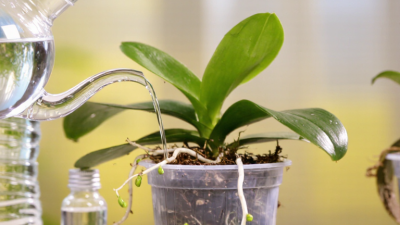
Before applying water-soluble orchid fertilizer, wet the roots with plain, room-temperature water. This helps rehydrate dry roots and can reduce uneven contact with concentrated nutrients. Let water run through the pot until the bark feels damp and the roots shift from silvery to green. Allow excess water to drain. The pot should not sit in a full saucer.
Dilute the fertilizer according to its label, then apply it to the pre-wetted potting medium. Pour slowly around the pot, keeping liquid out of the crown and leaf joints. If the roots are already green and damp, a brief rinse is enough; a long soak is unnecessary. It is tempting to rush this step, and dry pockets in bark can be easy to miss. Check that water flows freely from the drainage holes.
Tips: Use a narrow-spout jug for better control. If runoff collects beneath the pot, empty the saucer. When unsure whether the medium is evenly wet, pause and check the roots before feeding.
Feed “Weakly, Weekly,” Following American Orchid Society Guidance
Water-soluble fertilizer is easy to overuse because it disappears into the watering can. The American Orchid Society’s “weakly, weekly” guidance offers a practical starting point: apply a diluted solution during active growth rather than giving occasional heavy doses. Follow the fertilizer label, and do not assume every product has the same concentration. Some growers begin at one-quarter strength, but the right dilution depends on the formula and the orchid’s condition. Less is safer.
Water the orchid with plain water first if its roots are dry. Then apply the diluted fertilizer until it drains freely from the pot. For a plant growing in coarse bark, pour slowly so the solution reaches the roots instead of running straight through. Watch for firm green root tips and steady new growth. Brown root tips or a crust of salts on the bark can signal that the routine needs adjusting. I have found the calendar less reliable than the plant itself; a resting orchid may not need weekly feeding. Flush the pot with plain water periodically to wash away accumulated salts, especially when watering with hard tap water.
Flush the Potting Medium Monthly with Plain Water
How to Use Water Soluble Orchid Fertilizer?
Flush the Potting Medium Monthly with Plain Water
Water-soluble fertilizer is easy to apply, but salts can collect in orchid bark or moss over time. Mix the fertilizer at the label’s recommended strength, and apply it to already-moist roots. Feeding dry roots may cause damage. Once a month, skip the fertilizer and slowly pour plain water through the pot. Let it run freely from the drainage holes to carry away residue. The pot should drain completely; don’t leave it sitting in a saucer of water.
Tips: Use room-temperature water, and check that drainage holes are open. If the potting mix stays soggy, reduce watering rather than adding more fertilizer. A clear pot can help you spot wet patches and root condition. It’s not a perfect guide, though.
A monthly flush is a useful routine, not a fixed rule for every setup. Fine moss holds water longer than coarse bark, so watch how quickly your medium dries. If you see a white crust on the pot or mix, salts may be building up; flush thoroughly and reassess your feeding strength. Keep a simple note of feeding and flushing dates. Small changes in light or temperature can alter how quickly an orchid uses water, and I would not rely on the calendar alone.
How to Use Water-Soluble Orchid Fertilizer: Flush the Potting Medium Monthly
This example schedule shows one plain-water flush each month. Flush thoroughly so water drains through the pot, helping rinse away fertilizer salts. Continue to follow the fertilizer label for feeding frequency and dilution.