Water Soluble Orchid Fertilizer is a convenient way to provide orchids with measured nutrients during active growth. Unlike slow-release granules, it dissolves in water and reaches the root zone quickly. This matters because orchids often grow in bark, moss, or other airy media with limited nutrition. Their roots need access to moisture, oxygen, and carefully balanced minerals.
Orchid nutrition researcher Dr. Yin-Tung Wang offers a practical warning: “More fertilizer does not mean more growth.” His advice reflects a basic horticultural truth. Concentrated fertilizer can leave white salt deposits on bark and damage tender roots. A diluted solution, applied to already-moist roots, is usually safer than heavy feeding. The exact strength still depends on the orchid species, potting medium, season, and water quality.
Small details make a difference. A grower might dissolve a measured amount in a clean watering can, then watch for pale leaves, weak roots, or stalled growth. Clear roots may look firm and green after watering. Brown, soft roots suggest a deeper problem. Fertilizer alone will not repair poor light, stagnant air, or inconsistent watering.
The subject is not completely simple. Some products contain nitrogen, phosphorus, and potassium, while others add calcium, magnesium, or trace elements. Labels can be confusing. Even experienced growers sometimes overfeed after seeing slow growth. That mistake is understandable, but avoidable. Water Soluble Orchid Fertilizer works best as part of a balanced care routine, not as a quick cure.
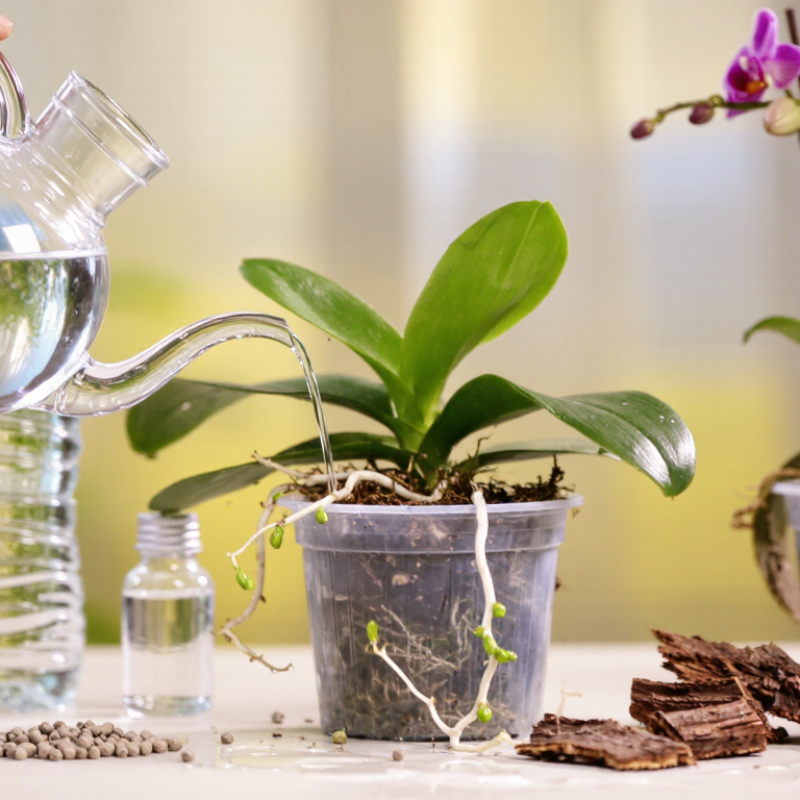
Water-soluble orchid fertilizer is a concentrated nutrient product designed to dissolve completely in irrigation water. Its basic ingredients usually include nitrogen, phosphorus, potassium, calcium, magnesium, and trace elements. Unlike slow-release granules, it becomes available to roots almost immediately. That speed matters for orchids grown in bark, where nutrients can drain quickly. The International Fertilizer Association recorded global fertilizer consumption at roughly 190 million tonnes of nutrients in 2022. This figure reflects agriculture broadly, not orchids, but it highlights why dosage control matters in concentrated products.
A practical fertilizer should mix without visible sediment and provide clear nutrient information. Electrical conductivity, or EC, helps growers judge salt concentration, while pH affects nutrient availability. The American Orchid Society commonly discusses diluted feeding, often around quarter-strength applications during active growth. Still, this is guidance, not a universal rule. A plant in fresh bark may respond differently from one in old, salty media. Watch the roots. Pale tips, crusty pot edges, or stalled growth can signal excess salts. Water-soluble fertilizer is not automatically better. It is simply more adjustable, faster acting, and easier to overuse. That last point deserves more attention.
Water-soluble orchid fertilizer dissolves quickly in irrigation water. Its nutrients reach roots through the potting medium. Unlike garden soil, bark and sphagnum mixes hold limited nutrients. Orchids therefore need careful, repeated feeding rather than heavy applications. University of Florida IFAS Extension guidance commonly discusses about 100–150 ppm nitrogen during active growth. This range supports leaves, roots, and flower development without forcing excessive foliage.
Nutrient composition matters more than a bold label. Nitrogen supports chlorophyll and new leaves. Phosphorus contributes to roots and reproductive growth. Potassium helps water regulation and tissue strength. Calcium and magnesium also matter, especially in low-mineral water. Trace elements, including iron, manganese, zinc, and boron, support enzyme activity. The American Orchid Society recommends diluted feeding and regular flushing. That advice reflects a practical risk: salts can collect around roots. I have seen pale leaves blamed on “weak fertilizer,” although poor light or damaged roots were the real problem. Fertilizer is not a cure-all.
Tips:
Water-soluble orchid fertilizer does not feed roots directly. It dissolves in irrigation water and moves through the potting media. In bark, water travels through large air spaces. In moss, it moves more slowly and remains longer. That difference changes nutrient exposure. A University of Florida IFAS orchid guide describes bark as fast-draining with limited nutrient-holding capacity. Nutrients may disappear quickly after watering.
Once dissolved, nitrogen, phosphorus, potassium, calcium, and trace elements enter the thin water film around media particles. Orchid roots absorb these ions through their velamen while moisture remains available. Excess solution exits through drainage holes. The American Orchid Society recommends diluted, regular feeding instead of heavy applications. Its quarter-strength guidance helps reduce salt injury, although one formula cannot fit every orchid. Electrical conductivity, or EC, shows salt buildup more clearly than leaf color.
A practical test uses a cheap EC meter before and after feeding. Rising readings can indicate trapped fertilizer salts. Brown tips may appear later. Plain-water flushing can help, but timing remains imperfect. I may flush too often. That is worth questioning. The USDA NASS 2023 Floriculture Crops Summary reported approximately 6.7 billion dollars in United States floriculture sales, reflecting the scale of controlled ornamental production. Yet media age, water hardness, temperature, and root condition still shape results. Feed the potting media, not merely the measuring spoon.
| Data Dimension | Verified Information | How It Works in Potting Media | Practical Consideration |
|---|---|---|---|
| Definition | A water-soluble orchid fertilizer is a dry or concentrated fertilizer designed to dissolve in irrigation water before application. | Dissolved nutrients move with the water through the potting mix and become available to roots as ions in the moist root zone. | The fertilizer should be completely dissolved and applied according to its label directions. |
| Primary Nutrients | Nitrogen supports leaf and stem growth; phosphorus participates in energy transfer and root development; potassium helps regulate water balance and supports overall plant function. | These nutrients dissolve into the water film surrounding bark, moss, coir, or other media and are absorbed mainly through the roots. | The N-P-K numbers on a fertilizer label indicate the relative percentages of nitrogen, available phosphate, and soluble potash by weight. |
| Secondary and Micronutrients | Calcium, magnesium, sulfur, iron, manganese, zinc, copper, boron, molybdenum, and chlorine are needed in varying amounts, depending on the plant and water supply. | They remain in the solution, attach temporarily to media surfaces, or are taken up by roots while moisture is present. | Nutrient availability can be affected by irrigation-water chemistry and the growing medium’s pH. |
| Bark-Based Media | Fir bark and similar chunky materials provide air spaces and drainage but generally hold fewer nutrients than fine, soil-based media. | Nutrients can pass through quickly during watering, especially when the mix is coarse or the pot has large drainage openings. | Regular, appropriately diluted feeding may be more effective than applying a large amount infrequently. |
| Sphagnum Moss | Sphagnum moss can retain substantial water and has acidic characteristics that change as it ages and decomposes. | The solution remains in the moss longer than in very coarse bark, increasing contact time between roots and dissolved nutrients. | Allowing the mix to remain constantly saturated can reduce root-zone oxygen and increase the risk of root problems. |
| Coconut Coir | Coconut coir holds water and has a meaningful cation-exchange capacity, so it can retain and exchange positively charged nutrients. | Some calcium, magnesium, potassium, and ammonium ions may interact with exchange sites on the coir rather than remaining entirely in the drainage water. | Well-rinsed, properly processed coir is preferable because untreated material may contain excessive soluble salts. |
| Root Uptake | Orchid roots absorb water and dissolved mineral nutrients through living root tissues, including the active inner root area beneath the velamen. | A wetting cycle creates a temporary nutrient solution around the roots; as the medium dries, nutrient movement slows. | Healthy roots, adequate moisture, oxygen, and suitable temperature are all necessary for efficient nutrient uptake. |
| Leaching and Salt Build-Up | Water-soluble nutrients can be washed out of the pot, but repeated fertilization without sufficient drainage can also leave soluble salts behind. | Evaporation removes water while some dissolved ions remain in the media, increasing the solution concentration around roots. | Periodic thorough watering with suitable-quality water can help flush accumulated soluble salts from a well-drained pot. |
| Water Quality | Tap water may contain calcium, magnesium, bicarbonate, sodium, or other dissolved substances that influence fertilizer performance. | Water chemistry can alter pH, electrical conductivity, and the balance of nutrients available in the root zone. | When symptoms are persistent, testing irrigation water and media pH is more reliable than changing fertilizer blindly. |
| Root-Zone pH | Many commonly cultivated orchids perform well in a mildly acidic root zone, often around pH 5.5–6.5, although requirements vary by species and medium. | pH affects the chemical form and availability of several nutrients, particularly iron, manganese, phosphorus, calcium, and magnesium. | The best target depends on the orchid species, water, fertilizer formulation, and potting materials. |
| Application Method | The fertilizer solution is normally applied during watering so that it passes evenly through the potting mix. | Water first when roots or media are very dry, then apply the prepared nutrient solution to reduce the chance of concentrated fertilizer contacting dehydrated roots. | Use the product label as the primary guide, adjust for water quality and plant response, and avoid applying stronger solutions to compensate for infrequent care. |
Application Methods, Dosage, and Feeding Frequency
Water soluble orchid fertilizer dissolves in water and delivers nutrients directly to the growing medium. It suits orchids because their roots receive nutrients during watering, rather than through heavy soil. In practice, I mix the fertilizer only after measuring the water. A half-strength solution is usually safer for mature orchids during active growth. Young, recently repotted, or stressed plants may need quarter strength. Always follow the product label, because nutrient concentrations vary.
Water the orchid lightly first if its roots are completely dry. Then apply the diluted solution until water drains from the pot’s holes. This method wets the roots evenly and reduces the risk of fertilizer burn. Avoid spraying concentrated fertilizer onto leaves, flowers, or exposed roots. During bright, warm growth periods, feeding every 7–14 days may work well. In cooler conditions or lower light, reduce feeding to every three or four weeks. Orchids resting after flowering may need little or no fertilizer.
Tips: Flush the pot with plain water once a month to remove salt buildup. Look for white crust, dark roots, or stalled growth. These signs suggest the dosage or frequency needs adjustment. There is no perfect calendar. I have found that recording watering dates prevents accidental overfeeding, although plant response should guide every change. A missed feeding is safer than a heavy one.
Water-soluble orchid fertilizer dissolves quickly in irrigation water, giving roots immediate access to nitrogen, phosphorus, potassium, and trace minerals. Its main benefit is control: growers can adjust feeding for light, season, pot size, and plant growth. The USDA’s 2023 Floriculture Crops Summary reported more than 6 billion dollars in U.S. floriculture sales, showing the scale of professional plant production. However, commercial value does not guarantee household success.
University of Florida IFAS orchid guidance supports dilute feeding and regular flushing. Many growers begin near 50–100 parts per million of nitrogen, especially for plants growing in bark. An electrical conductivity meter can reveal rising salt levels. Watch the roots. White crust on the pot rim, brown root tips, or stalled leaves may signal excess fertilizer. Fertilizer cannot repair poor light, stagnant water, or rotten roots. That limitation is easy to overlook.
Safe handling matters. Wear gloves and eye protection when mixing concentrated powder or liquid. Add fertilizer to water, not water to a concentrated container. Measure carefully, and never guess from a damp spoon. Flush the pot with plain water every few feedings, unless professional testing suggests another schedule. Keep the container sealed, dry, and away from children and pets. I still find “more feeding” tempting after slow growth, but that reaction can worsen salt stress. A simple log of dilution, watering date, and leaf condition creates better evidence than memory.