Why is Potassium Nitrate Essential for Global Industries?
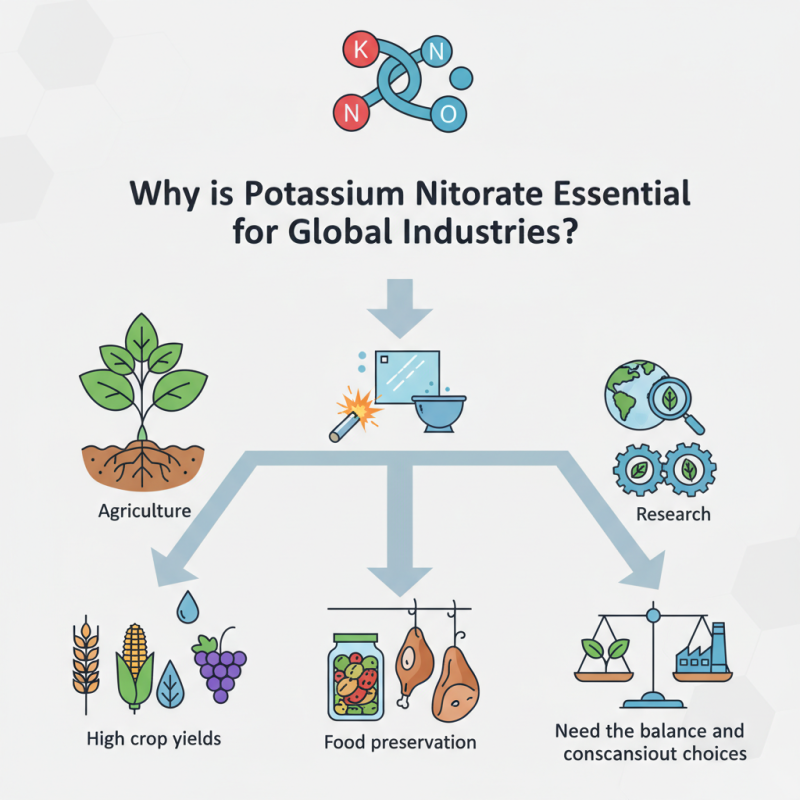
Potassium Nitrate has a profound impact on various global industries. Dr. Emily Carter, a leading expert in agricultural chemistry, emphasizes its significance: "Potassium Nitrate is a cornerstone for sustainable crop production." This statement reflects the vital role of Potassium Nitrate in enhancing food security and agricultural efficiency.
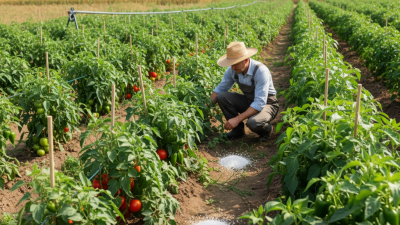
In agriculture, Potassium Nitrate serves as an essential fertilizer. It supplies both potassium and nitrogen, crucial nutrients for plant growth. Its use ensures healthier crops and higher yields. However, the challenge lies in balancing its application. Overuse can lead to soil degradation and other environmental issues. The industry must address these concerns responsibly.
Beyond agriculture, Potassium Nitrate is integral to the production of glass, explosives, and food preservation. Its versatility is impressive. Yet, industries must maintain strict quality controls and sustainable practices. The reliance on Potassium Nitrate demands ongoing evaluation. The path forward requires innovation and conscientious choices.
The Role of Potassium Nitrate in Agriculture: A Quantitative Analysis
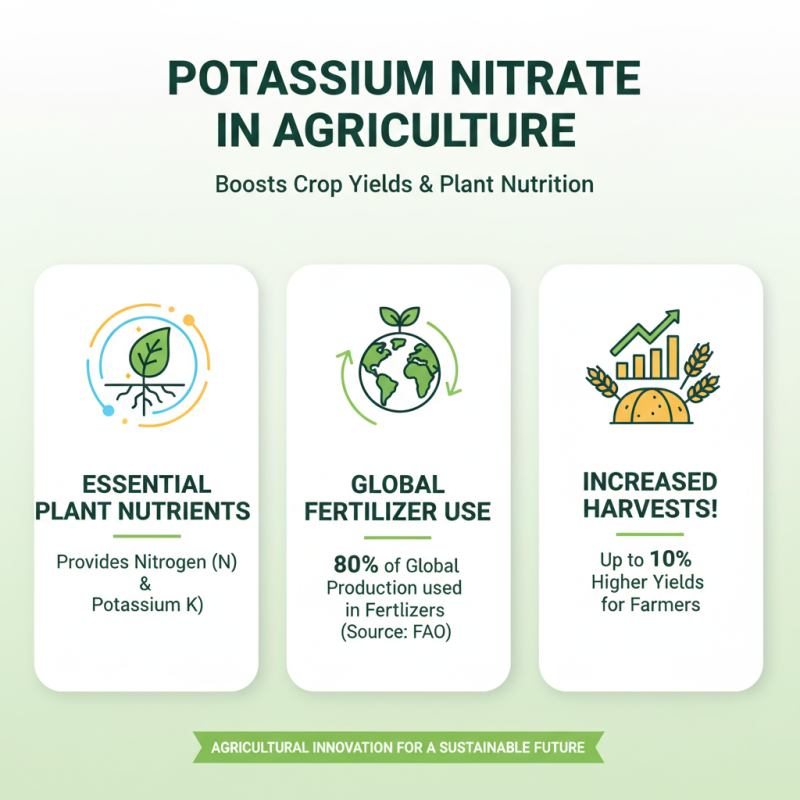
Potassium nitrate plays a crucial role in agriculture. It provides essential nutrients to plants, particularly nitrogen and potassium. According to the Food and Agriculture Organization (FAO), about 80% of potassium nitrate produced globally is used in fertilizers. This process enhances crop yields significantly. Farmers who apply potassium nitrate can expect an increase of up to 10% in their harvests.
The U.S. Geological Survey (USGS) reports a 20% growth in potassium nitrate usage over the past decade. This rise is driven by the demand for efficient and sustainable agriculture. However, the dependency on this compound raises concerns. Overuse can lead to soil degradation and water pollution. Many farmers struggle with the balance between maximizing yield and maintaining soil health.
Effective management practices are essential. Crop rotation and careful application rates can mitigate negative impacts. Studies show that integrating potassium nitrate into soil management can improve both crop quality and biodiversity. Still, ongoing research is necessary to optimize its use sustainably. This reflects a broader challenge in modern agriculture: balancing productivity with environmental stewardship.
Potassium Nitrate Production: Global Manufacturing and Market Trends
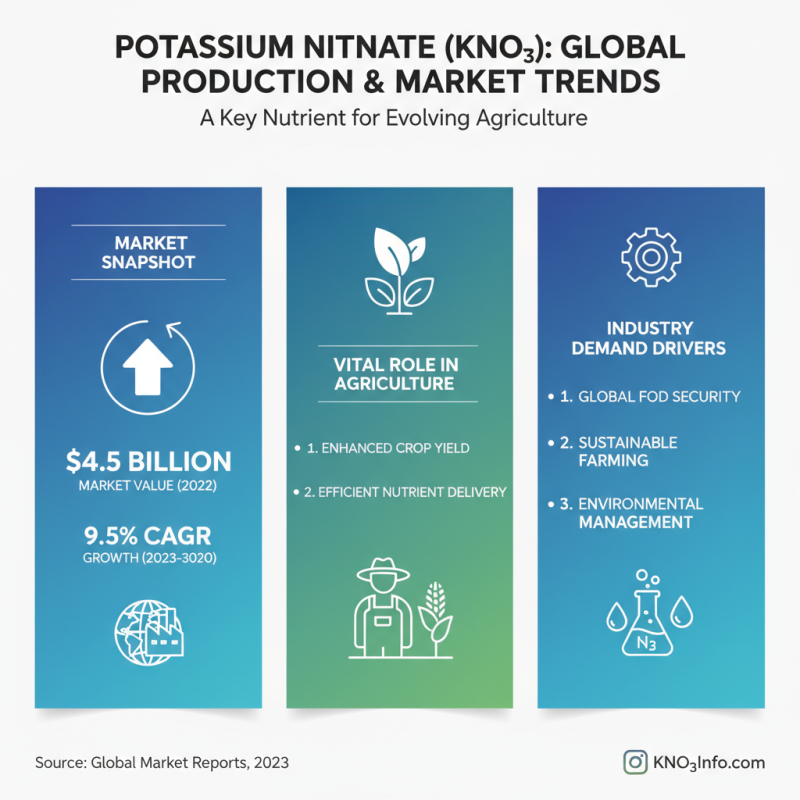
Potassium nitrate (KNO3) plays a vital role in various industries, particularly in fertilizers. According to global market reports, the potassium nitrate market was valued at approximately $4.5 billion in 2022. This sector is projected to witness a robust growth rate of 9.5% from 2023 to 2030. As agriculture evolves, the demand for efficient nutrients like KNO3 increases. Farmers seek solutions for enhancing crop yield while managing environmental impacts.
The production of potassium nitrate heavily relies on natural resources and industrial processes. Countries rich in minerals dominate the market. For instance, South America and Europe are key producers. However, the reliance on these regions poses risks, such as geopolitical tensions and supply chain disruptions. Recent data shows a significant increase in production costs, which raises concerns about sustainability. Companies must adapt to these challenges while ensuring quality and efficiency.
Additionally, there is a growing trend towards adopting sustainable practices in potassium nitrate production. Innovative methods, such as recycling systems, are gaining traction. Some facilities utilize waste products to reduce environmental impact. Reports indicate that approximately 30% of the production facilities are exploring these eco-friendly methods. Risk remains; the transition to greener practices can be slow and costly. Balancing profitability and sustainability is crucial for the future of the potassium nitrate industry.
Environmental Impact of Potassium Nitrate in Fertilizer Use
Potassium nitrate plays a vital role in agriculture, serving as a key ingredient in fertilizers. Its benefits are well-documented, with approximately 30% of potassium fertilizer used globally being potassium nitrate. However, its environmental impact cannot be overlooked. High usage leads to soil degradation and water contamination, primarily through runoff.
In regions with intensive farming, the excess nitrogen from potassium nitrate can cause eutrophication in nearby water bodies. This process results in algal blooms, depleting oxygen and harming aquatic life. According to a report by the Food and Agriculture Organization, around 50% of agricultural runoff contributes to this ecological imbalance.
While potassium nitrate increases crop yield, the balance between productivity and sustainability is delicate. Farmers need to adopt better management practices to mitigate its environmental footprint. Precision agriculture and regular soil testing can help optimize its use. Striking a balance is crucial for the future of our environment and agricultural practices.
Potassium Nitrate in Food Preservation: Health Benefits and Risks
Potassium nitrate plays a critical role in food preservation. It works as a natural preservative, inhibiting the growth of harmful bacteria. This chemical compound helps to extend the shelf life of various meats. Its effectiveness in curing meats has made it a common choice for many processing techniques.
However, the health implications of potassium nitrate are not entirely straightforward. While it can prevent spoilage, excessive consumption may lead to potential health risks. Concerns arise when it comes to nitrite formation in the body. Some studies have suggested a link between high levels of nitrites and certain health issues. Further research is necessary to understand these risks fully.
Ensuring food safety demands a balance between preservation and health risks. Consumers should be aware of the potential side effects of potassium nitrate. Education on food preservation methods can help make informed choices. A deeper understanding of such chemicals is vital for those who manage food production.
Potassium Nitrate in Global Industries
Potassium nitrate is a vital compound used in various global industries including agriculture, food preservation, and pharmaceuticals. This chart illustrates the estimated global demand for potassium nitrate across different sectors, highlighting its importance and widespread usage.
Emerging Applications of Potassium Nitrate in Technology and Industry
Potassium nitrate is gaining traction across various industries. Its role in
agriculture is well-known, enhancing plant growth and crop yields. However, new applications are emerging that highlight its versatility. In the realm of
food preservation, potassium nitrate helps maintain product freshness. This chemical inhibits bacterial growth, extending shelf life for meats and processed foods.
In the technology sector, potassium nitrate serves as a key ingredient in solid-state
batteries. Its unique properties allow for efficient energy storage, which is vital as the world shifts toward renewable energy. Yet, this application is still evolving. Researchers are exploring its effectiveness compared to traditional battery materials.
Questions remain about scalability and environmental impact.
The use of potassium nitrate in environmental management also showcases its importance. It aids in
wastewater treatment by enhancing the breakdown of pollutants. Nevertheless, challenges exist in optimizing its application for different waste types. The industry must consider the specific conditions to maximize efficiency. As potassium nitrate finds new roles, continuous
research and development remain essential for its sustainable use.