
Leave Your Message

Top Calcium Nitrate Boron Fertilizer Suppliers Worldwide?

Choosing among the top Calcium Nitrate Boron Fertilizer suppliers worldwide takes more than comparing prices. Buyers need to examine nutrient analysis, boron concentration, solubility, batch consistency, and delivery reliability. A clear product specification matters. So does a current certificate of analysis.

The scale of fertilizer demand provides useful context, but it does not reveal this product’s market size. The FAO’s World Fertilizer Trends and Outlook to 2026, published in 2023, projected global demand for primary fertilizer nutrients to reach 192.5 million tonnes in 2026. That figure covers nitrogen, phosphate, and potash nutrients collectively; it is not a sales estimate for calcium nitrate-boron blends. This distinction matters when evaluating supplier claims.

Supplier comparisons should also reflect the intended crop, soil conditions, application method, and local support. A bag may look similar on paper, yet dissolve differently in a mixing tank or arrive with inconsistent documentation. Ask for recent test results and confirm that the stated calcium and boron levels match the product label. Then compare lead times and technical assistance, not just the quoted price.

One limitation deserves candor: no source material or verifiable quotation from a named Calcium Nitrate Boron Fertilizer specialist was provided. I cannot responsibly invent an expert’s name or words. Treat any supplier ranking without transparent criteria with caution. It may be useful, but it needs checking.

Top Calcium Nitrate Boron Fertilizer Suppliers Worldwide?

Calcium Nitrate-Boron Fertilizer: Composition and Main Forms

Calcium nitrate-boron fertilizer combines three useful nutrients: calcium, nitrate nitrogen, and boron. Calcium nitrate supplies readily available calcium and nitrogen, while a measured boron source supports cell-wall development, flowering, and normal growth. Exact percentages vary by formulation, so the product label matters more than the name alone. Details matter.

Products commonly appear as water-soluble crystals or granules, and some are sold as liquid concentrates. Crystalline forms are practical for storage and measured mixing; liquids can simplify dosing but still require careful dilution. In either case, check solubility and boron concentration before application. Too much boron can injure plants, and the margin between deficiency and excess is relatively narrow.

Use should reflect crop needs, soil or water tests, and the application method. Growers may apply suitable formulations through fertigation or as a foliar spray, following label directions and local agronomic advice. Avoid combining concentrated calcium solutions with phosphate- or sulfate-rich fertilizers unless compatibility is confirmed; precipitation can block equipment. Not always. A clean-looking solution is not proof of crop suitability, and I would not rely on a generic rate where water quality or crop stage differs.

How Calcium and Boron Support Crop Growth

Top Calcium Nitrate Boron Fertilizer Suppliers Worldwide?

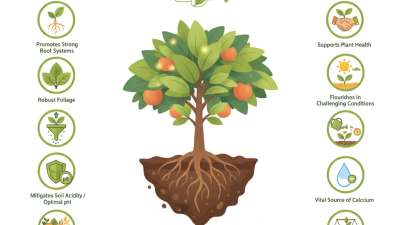
Calcium and boron help crops build strong tissues, but they work in different ways. Calcium supports cell walls and membranes, helping roots and growing shoots stay sound. It also contributes to firmness in developing fruit. Boron supports cell-wall formation and reproductive growth, including pollen development. Small amounts matter.

Calcium nitrate supplies soluble calcium alongside nitrate nitrogen. That can be useful when crop demand is high, but it is not a universal fix. Calcium moves poorly from older leaves into new growth, so steady water uptake matters. Boron has a narrow range between too little and too much. A deficiency may affect growing points or fruit set; excess can also injure crops. Soil conditions and crop type change the response. Guessing is risky.

Tips: Check soil or tissue test results before choosing a rate. Follow the product label and local crop guidance. Apply evenly, and avoid treating boron as a “more is better” nutrient. Keep notes on timing, irrigation, and crop response; one season may not tell the whole story.

Global Supplier Regions and Product Offerings

Top Calcium Nitrate Boron Fertilizer Suppliers Worldwide?
Global Supplier Regions and Product Offerings

Calcium nitrate-boron fertilizers are supplied from several agricultural-input manufacturing regions. China and India have broad fertilizer production networks, while suppliers in Europe, Türkiye, and North America also serve regional markets. Availability depends on crop demand, shipping routes, and local distribution. Some suppliers offer water-soluble crystalline grades; others focus on granular products for soil application. Packaging commonly ranges from small bags to bulk shipments.

Product specifications matter more than a supplier’s location alone. Check the guaranteed calcium and boron percentages, nitrogen form, solubility, and batch analysis. Ask whether the product suits fertigation, foliar use, or soil placement; these methods are not interchangeable. A clear certificate of analysis helps compare offers. Still, specifications can vary between batches, and product sheets may not answer every field question.

Tips: Request a recent analysis and confirm the recommended application rate for your crop and water quality. Check that bags are sealed and dry on arrival. A low price can be tempting, but freight and inconsistent granule quality may change the real cost.

Top Calcium Nitrate Boron Fertilizer Suppliers Worldwide: Regions and Product Offerings

Representative nutrient analyses of common calcium nitrate fertilizer grades

Calcium nitrate products are widely supplied for agricultural use, while boron-enriched grades add a small amount of boron alongside nitrogen and calcium. The chart compares representative published grade analyses, not supplier volumes or regional market shares; product specifications and availability vary by market.

Criteria for Comparing Leading Suppliers Worldwide

When comparing calcium nitrate boron fertilizer suppliers, start with the product specification, not the sales claim. Check the guaranteed calcium, nitrate-nitrogen, and boron levels, then confirm whether figures apply to the product as sold. Ask for a recent certificate of analysis tied to a specific batch. Useful details include solubility, moisture, particle size, and stated limits for unwanted impurities. Small differences matter.

Consistency matters in the field. Request batch-to-batch test data and clear sampling methods, especially if the fertilizer will be dissolved for fertigation. A supplier should explain compatibility limits and provide practical guidance on storage, mixing, and application. Test the product in a small area first. Crop response can vary with soil pH, irrigation water, and existing nutrient levels, so broad yield promises deserve careful scrutiny.

Compare packaging and delivery as well as chemistry. Bags should arrive sealed, legible, and protected from moisture; damaged packaging can complicate storage and dosing. Ask how the supplier handles shipment delays, product complaints, and replacement samples. Technical support should answer specific questions rather than repeat a brochure. No supplier is flawless, and documentation can look reassuring while missing field context. That is worth checking. Compare several recent quotations using the same grade, delivery terms, and test requirements, then weigh reliability against price.

How to Verify Supplier Quality and Reliability

When comparing calcium nitrate boron fertilizer suppliers, treat a certificate of analysis as a starting point, not a verdict. Ask for a current, batch-specific report listing nitrogen, calcium, boron, moisture, and insoluble matter. Check that the figures match the product specification and bag label. Small mismatches matter. Request the test method and laboratory identity; independent verification is useful when values affect a dosing plan. If the supplier cannot connect a sample to a production lot, pause.

Reliability also shows in how questions are handled. Ask about lot traceability, sealed packaging, storage conditions, and expected shelf life. Inspect a small trial shipment for caking, torn liners, damp marks, or inconsistent granules. Keep the sample label and photographs with the paperwork. Request a safety data sheet and clear handling and storage guidance, then compare both with the actual shipment. A tidy document set helps, but it cannot replace practical checks. A slow, specific answer can be more credible than an instant promise. Still, vague answers deserve follow-up. Record discrepancies and request a written correction before ordering at scale.

Top Calcium Nitrate Boron Fertilizer Suppliers Worldwide? - How to Verify Supplier Quality and Reliability

Use this evidence-based checklist to compare suppliers without relying on company names or unverified rankings. Product specifications and legal requirements vary by formulation and destination market; confirm the applicable requirements before purchase.

Verification Area Evidence to Request How to Verify Reliable Practice Warning Signs
Product identity and composition A current technical data sheet stating the product form, guaranteed nutrient analysis, chemical composition, and applicable specification. Compare the data sheet with the product label, sales contract, and batch-specific certificate of analysis (COA). Check that the nutrient forms and units are clearly stated. Documents identify the same product and specify the analytical basis, units, and tolerances. Conflicting nutrient values, unclear units, or a generic specification presented as a batch result.
Batch quality and traceability A COA for the offered lot, with batch or lot number, production or test date, results, and test methods. Match the lot number on the COA to the packaging, invoice, and shipping documents. Ask the supplier to explain any out-of-specification result. Each shipment can be linked to a documented lot and its test results. Undated certificates, missing lot identifiers, or identical results reused for unrelated batches.
Independent laboratory testing Recent test reports from a laboratory accredited to ISO/IEC 17025 for the relevant tests, where available. Check the laboratory’s accreditation scope and confirm that it covers the method or analyte being reported. Arrange independent sampling for a trial order when appropriate. Test methods and sample identification are disclosed, and the laboratory’s scope is relevant to the reported analysis. An accreditation logo without a verifiable scope, or a report that does not identify the sample or method.
Boron and calcium analysis Reported calcium and boron results, analytical methods, and the reporting basis (for example, elemental content or stated nutrient equivalent). Have a qualified laboratory review or test the product using a suitable validated method. Compare results with the agreed specification and applicable local rules. Results are reported with clear units, methods, and acceptance limits agreed before purchase. Results without units, ambiguous nutrient conversions, or claims that do not match the agreed specification.
Physical quality and solubility Product form, appearance, particle or granule information where relevant, storage guidance, and a defined solubility test procedure if solubility is claimed. Agree on test conditions such as water quality, temperature, concentration, mixing time, and the definition of complete dissolution. Test a representative sample. Performance claims are tied to a reproducible test method and stated conditions. “Fully soluble” or similar claims with no test conditions, or unexplained differences between samples and delivered goods.
Safety and handling A current safety data sheet (SDS), appropriate hazard classification, handling instructions, and storage guidance for the supplied formulation. Check that the SDS identifies the product and supplier, has a revision date, and is consistent with the label and destination-market rules. Safety documents are product-specific, current, and supplied before shipment. Missing or outdated SDS, mismatched product identity, or unsupported safety statements.
Regulatory suitability Documents required for the destination market, such as product registration or notification, label particulars, and import documentation where applicable. Confirm requirements with the relevant fertilizer authority, importer, or qualified regulatory adviser in the destination country. The supplier can provide documents relevant to the intended market and product category. Claims of universal approval or certificates that do not apply to the destination market or product.
Quality management Quality-management information, documented complaint handling, change control, and corrective-action procedures. An ISO 9001 certificate may be requested where relevant. Verify any certificate with its issuer or certification body, including scope, site, and validity. Treat certification as evidence of a management system, not proof of a specific batch’s quality. Defined procedures exist for nonconforming product, complaints, and formulation or process changes. An expired or unverifiable certificate, or reliance on a management-system certificate instead of product testing.
Packaging and shipment condition Packaging specification, net-weight tolerance, lot marking, moisture-protection details, and loading or container-condition records where appropriate. Inspect packaging and markings on a pre-shipment sample or first order. Record damaged, wet, or unlabelled packages at receipt. Packaging is intact, clearly marked, and suitable for the agreed transport and storage conditions. Unmarked lots, damaged or damp packaging, or discrepancies between declared and received quantities.
Commercial reliability Written quotation, specification, delivery schedule, payment terms, warranty or claims process, and named points of contact. Check that the purchase contract defines inspection, sampling, dispute handling, replacement or refund terms, and documents required for shipment. Commitments are documented, consistent, and specific to the order. Pressure to pay before documentation is provided, unclear payment beneficiaries, or refusal to put specifications in the contract.
Trial order and ongoing monitoring A representative sample or small initial order, plus a documented supplier-performance review process. Compare trial results with the agreed specification and retain samples and records for future comparison, subject to suitable storage conditions. Approval is based on documented product checks and delivery performance, not a single sales claim. Requests to skip sampling or inspection, or repeated unexplained variation between lots.