Leave Your Message
Choosing a reliable supplier is a practical decision, not just a search for a low price. This guide to 2026 Best Water Soluble Granular Fertilizer Suppliers introduces the factors growers, distributors, and purchasing teams can use to compare potential partners. The right Water Soluble Granular Fertilizer should match the crop, irrigation setup, and feeding schedule—not merely look attractive on a product sheet.
Details matter. Check the stated nutrient analysis, granule size, moisture level, and dissolution guidance. Ask for a current certificate of analysis and confirm that product specifications apply to the batch being offered. A small jar test can also reveal residue, uneven dissolution, or other issues before a larger order reaches the farm. Small differences count.
Supplier evaluation should include more than product quality. Consider sample availability, technical support, packaging options, shipping timelines, and how clearly the company answers questions. Ask how products are stored and protected from moisture during transit. These checks cannot guarantee a perfect outcome, but they can expose gaps early. That takes time.
The suppliers featured in this overview should be assessed against consistent, verifiable criteria rather than broad marketing claims. Regional availability and crop needs may change which option makes sense. No supplier is perfect. Specifications can vary by product and batch, so buyers should confirm current details directly before purchasing. A careful comparison gives readers a stronger starting point for sourcing in 2026.
What Water-Soluble Granular Fertilizer Is and How It Works
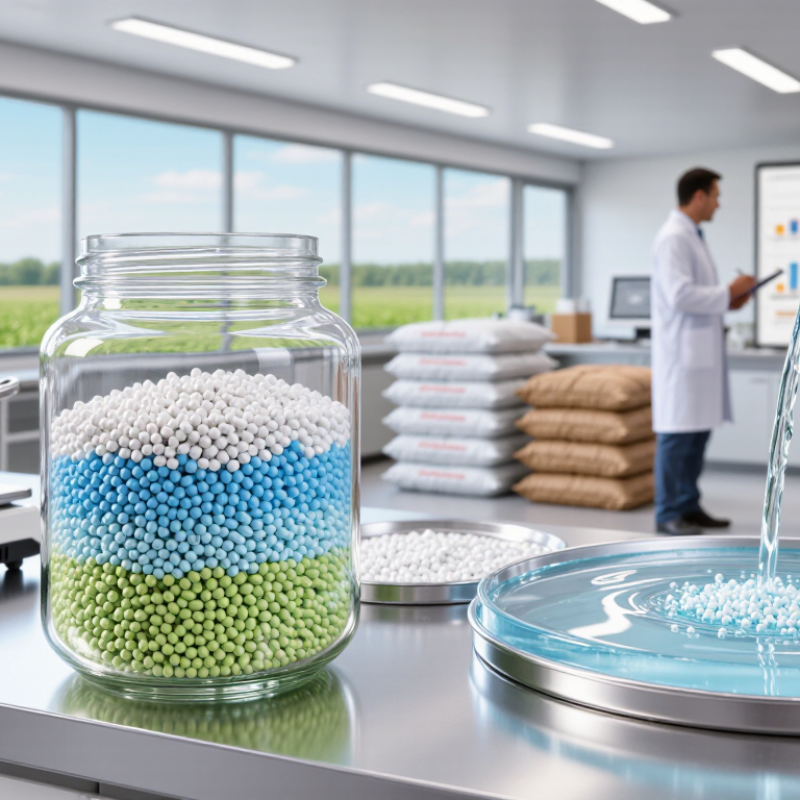
Water-soluble granular fertilizer is a dry, concentrated product designed to dissolve in irrigation water. Unlike slow-release granules, it forms a nutrient solution quickly when mixed correctly. Nitrogen, phosphorus, potassium, and trace elements can then move through drip lines, sprinklers, or controlled greenhouse systems.
The process is practical. A grower measures the granules, adds them to clean water, and checks whether crystals remain. Complete dissolution matters. Undissolved particles may clog filters or create uneven feeding. Water temperature, hardness, mixing order, and product purity all influence performance. A field test with a small batch is wiser than trusting the label alone.
The numbers show why precision matters. FAO reported global fertilizer use at roughly 185 million tonnes of nutrients in 2022, highlighting the scale of nutrient management. The International Fertilizer Association’s 2024 outlook expects global demand to approach 200 million tonnes of nutrients by 2028. These figures describe the wider fertilizer market, not only soluble granules, but they reveal growing pressure to use nutrients efficiently.
In practice, growers should match concentration to crop stage, irrigation volume, and soil test results. Excess salts can raise root-zone electrical conductivity and stress young plants. That risk is sometimes underestimated. Reliable suppliers should provide solubility data, nutrient analysis, batch traceability, and clear mixing guidance. Better evidence beats attractive claims.
| Fertilizer Type | Typical Grade (N–P₂O₅–K₂O) | How It Works | Common Use | Supplier Checks |
|---|---|---|---|---|
| Water-soluble granular fertilizer | Varies by formulation | Granules dissolve in water, releasing soluble nutrients that can be applied in irrigation water or as a prepared solution. Nutrients are then available for root uptake, subject to soil, water, and crop conditions. | Fertigation, greenhouse production, nurseries, and other applications requiring dissolved nutrients. | Request a product specification, guaranteed analysis, dissolution instructions, and guidance on filtration and irrigation-system compatibility. |
| Urea | 46–0–0 | A concentrated nitrogen source. After application, soil enzymes convert urea through intermediate forms; nitrogen availability and losses depend on placement, moisture, temperature, and soil conditions. | Nitrogen supply in soil or in a properly prepared solution where the product and application system are suitable. | Confirm nitrogen content, product solubility and handling instructions. Check whether the intended use permits this nitrogen source. |
| Monoammonium phosphate (MAP) | Common grade: 12–61–0 | Supplies nitrogen and phosphorus. Its dissolving behavior and compatibility depend on product grade, water chemistry, concentration, and temperature. | Phosphorus-containing fertilizer programs; use in fertigation only when the grade is specified as suitable and compatibility is checked. | Verify the guaranteed analysis and water-solubility specification. Test for precipitation with the farm’s water and other fertilizers before use. |
| Monopotassium phosphate (MKP) | Common grade: 0–52–34 | Provides phosphorus and potassium without nitrogen. Once dissolved, the ions are carried in the solution for application to the crop root zone. | Fertigation or foliar programs that require phosphorus and potassium, subject to crop and label directions. | Check soluble nutrient guarantees, dissolution directions, and compatibility—especially before mixing with calcium-containing products. |
| Potassium nitrate | Common grade: 13–0–46 | Supplies nitrate nitrogen and potassium in soluble form. The two nutrients are delivered together when the product is dissolved and applied. | Fertigation and other programs requiring both nitrate nitrogen and potassium. | Confirm the grade, solubility data, storage requirements, and suitability for the intended irrigation equipment. |
| Ammonium sulfate | Common grade: 21–0–0; typically about 24% sulfur | Supplies ammonium nitrogen and sulfur. Soil processes affect the nitrogen form and can influence soil pH over time. | Nitrogen and sulfur programs where the crop, soil, and water conditions make these nutrients appropriate. | Check the guaranteed nitrogen and sulfur analysis, intended application method, and water compatibility. |
| Supplier quality documentation | Not applicable | Documents help buyers verify nutrient guarantees, product identity, batch consistency, and safe handling; they do not replace local agronomic advice. | Supplier assessment and incoming-product checks. | Request a current technical data sheet, safety data sheet, certificate of analysis for the relevant batch, traceability details, and clear complaint procedures. |
| Water and mixing compatibility | Not applicable | Dissolved fertilizers can form insoluble precipitates when incompatible ions meet. For example, concentrated calcium solutions may react with phosphate or sulfate sources. | Planning stock solutions and fertigation tank mixes. | Ask for written mixing guidance. Check water quality and perform a small jar test using the intended water, concentrations, and mixing order. |
Note: N–P₂O₅–K₂O figures are typical fertilizer grades expressed as percentages by weight; actual guarantees vary by product and jurisdiction. “Water-soluble” does not by itself confirm that a product is suitable for every irrigation system or tank mix. Follow the product label and local agronomic guidance.