Choosing reliable Calcium Nitrate Fertilizer suppliers requires more than comparing prices. Product consistency, nutrient analysis, packaging, and delivery performance can directly affect crop results. A dependable supplier should provide clear specifications, safety documentation, batch information, and responsive technical support. These details matter when fertilizer moves across borders or remains in storage for several months.
This guide examines seven leading suppliers worldwide through practical purchasing factors. It considers production capacity, quality-control systems, export experience, regional availability, and customer service. It also reviews whether each company serves greenhouse growers, commercial farms, distributors, or specialty crop producers. Buyers should confirm current certifications and local import requirements before placing an order. Conditions change, and a supplier’s performance may differ by region.
Field experience shows that the cheapest offer is not always the most economical choice. A damaged bag, delayed shipment, or poorly explained application rate can create avoidable losses. Clear communication matters. So does traceability.
The selected companies represent different strengths rather than identical business models. Some focus on large-volume contracts, while others support smaller agricultural customers. The ranking is useful, but not absolute. Supplier availability, freight costs, crop needs, and seasonal demand can quickly change the best option. Readers should treat this overview as a starting point, then request recent documents, samples, and written quotations. A careful decision protects both crop performance and investment.

Calcium nitrate is often judged by its label, but the label needs careful reading.
Standard agricultural grades commonly contain 15.5% total nitrogen and 19% calcium by mass. Nitrogen is highly soluble and quickly available to crops. Calcium supports cell-wall strength, fruit quality, and growing-point development. The numbers matter.
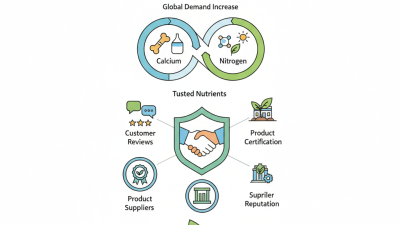
The International Fertilizer Association’s Medium-Term Fertilizer Outlook 2024–2028 projects global fertilizer demand to grow by about 1.7% annually. This wider demand increases pressure on supply consistency, especially for international buyers.
A strong supplier should provide a current batch certificate, clear nutrient analysis, and traceable production details. Request results for moisture, insoluble matter, chloride, and heavy metals. Small differences can affect fertigation performance.
Check the physical product, too.
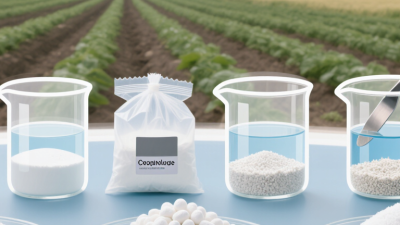
Clean white granules should dissolve without excessive residue. A quick bucket test can reveal problems, although it cannot replace laboratory analysis. European Regulation (EU) 2019/1009 also highlights documented conformity and quality control for fertilising products.
Still, compliance paperwork is not proof of a perfect batch. I would compare three recent certificates, not one impressive sample.
Packaging strength, moisture protection, delivery history, and technical support also deserve attention. Price alone is a weak filter.
Ranking the seven best calcium nitrate suppliers requires more than comparing online prices. Start with product quality: verify calcium and nitrate percentages, moisture levels, particle size, and batch consistency. Request recent certificates of analysis from independent laboratories. Reliable suppliers should explain their testing methods clearly. Traceability matters too. Each shipment should connect to a production batch, inspection record, and documented storage history.
Evaluate manufacturing experience, regulatory compliance, and delivery performance across regions. Look for suppliers with practical knowledge of fertigation, greenhouse crops, and open-field applications. Technical teams should provide accurate guidance on solubility, compatibility, and application rates. Review customer references, complaint handling, and replacement procedures. A low price can hide weak quality control or costly delays. I would score these factors separately, then compare the seven suppliers using the same evidence. Personal impressions can mislead.
Tips: Build a weighted scorecard before contacting suppliers. Give quality and consistency more weight than price. Ask for samples from different production dates, not just one favorable batch. Check packaging strength, labeling accuracy, and moisture protection after delivery. Record every response. Some suppliers may answer quickly but offer vague documents. That is a warning. Also, do not treat certifications as proof of perfect performance; verify their scope and validity. A careful ranking may change after field trials, and that is acceptable. Real-world crop response sometimes challenges laboratory expectations.
Choosing among the 7 best calcium nitrate fertilizer suppliers worldwide requires more than comparing quoted prices. The International Fertilizer Association reports global fertilizer demand above 200 million tonnes of nutrients annually, yet calcium nitrate remains a specialized product. Supplier profiles should show installed capacity, practical annual output, and storage conditions. Capacity matters during peak planting seasons.
ISO certification deserves careful inspection. ISO 9001 supports documented quality systems, while ISO 14001 indicates environmental management practices. However, certification alone proves little unless its scope covers fertilizer production and the stated facility. Buyers should request recent certificates, batch records, and independent laboratory results. Small details matter here. A missing audit scope is a warning sign.
Purity should match the technical specification, not merely a sales description. Standard calcium nitrate fertilizer commonly contains about 15.5% nitrogen and approximately 19% calcium, depending on the formulation and reporting basis. A certificate of analysis should disclose moisture, insoluble matter, chloride, heavy metals, and particle-size distribution. Export reach can be checked through UN Comtrade trade records, especially HS code 310260, alongside port access and documented delivery history. Strong suppliers explain customs documents, packaging options, and traceability across shipments. Some profiles still rely on impressive maximum capacity figures. That is not enough. Real export performance is harder to verify, and buyers should remain cautious.
When comparing the seven best calcium nitrate fertilizer suppliers worldwide, price is only one buying signal. IFA’s Medium-Term Fertilizer Outlook 2024–2028 places global nitrogen demand above 110 million tonnes annually during the forecast period. That pressure can affect regional quotations, freight, and lead times. Compare delivered cost, not only the quoted price per tonne. Ask for a recent certificate of analysis, production date, and moisture specification. Solubility matters in fertigation. A practical product should dissolve quickly, with minimal sediment, in a clean 20°C water sample. Still, real farm water may contain bicarbonates or iron. Laboratory results can look better than field performance.
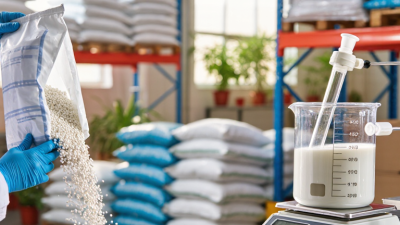
Packaging also changes the final cost. Common formats include 25-kilogram moisture-resistant bags, 500-kilogram flexible intermediate bulk containers, and bulk shipments. Smaller bags suit greenhouse operators, but they increase handling costs. Regional availability deserves equal attention. Ports, inland transport, customs procedures, and seasonal demand can create large differences between Europe, Asia, Africa, and the Americas. Public trade statistics can help, but calcium nitrate is not always separated clearly in customs classifications. That limitation deserves caution.
Tips: Request two delivered quotations and one trial sample. Check dissolution after 10 minutes. Inspect the inner liner for pinholes. Recalculate cost per kilogram of nitrogen and calcium. Supplier rankings should remain provisional until these checks are complete.
| Comparison Dimension | Supplier Profile A European Manufacturer |
Supplier Profile B East Asian Exporter |
Supplier Profile C Middle Eastern Producer |
Supplier Profile D South Asian Producer |
Supplier Profile E North American Distributor |
Supplier Profile F Latin American Importer |
Supplier Profile G African Regional Distributor |
|---|---|---|---|---|---|---|---|
| Typical product grade | Water-soluble agricultural grade | Standard granular agricultural grade | Greenhouse and fertigation grade | Water-soluble agricultural grade | Premium greenhouse grade | Imported fertigation grade | General agricultural grade |
| Typical nutrient analysis | 15.5% total nitrogen Approximately 19% calcium |
15.5% total nitrogen Approximately 19% calcium |
15.5% total nitrogen Approximately 18.8–19% calcium |
15.5% total nitrogen Approximately 19% calcium |
15.5% total nitrogen Approximately 18.8–19% calcium |
15.5% total nitrogen Approximately 19% calcium |
| Solubility profile | Fully water soluble; suitable for fertigation | Fully water soluble; filtration recommended for precision irrigation | Fully water soluble; suitable for hydroponic nutrient programs | Fully water soluble; commonly used in drip irrigation | Fully water soluble; consistent dissolution for greenhouse systems | Fully water soluble; confirm batch specification before use | Fully water soluble; suitable for field and protected crops |
| Typical physical form | White or off-white prills or granules | White granules or prills | White crystalline granules | White crystals or granules | Fine white crystals or uniform granules | White crystals or granules | White to off-white granules |
| Indicative bulk price | US$300–450 per metric ton | US$220–380 per metric ton | US$280–430 per metric ton | US$260–420 per metric ton | US$550–850 per metric ton | US$420–700 per metric ton | US$450–750 per metric ton |
| Price basis | Indicative bulk export price, usually FOB or delivered within Europe | Indicative FOB export price; freight quoted separately | Indicative regional bulk price; port and inland freight may vary | Indicative ex-works or FOB price | Indicative delivered distributor price | Indicative imported price including regional logistics | Indicative delivered regional price |
| Common packaging options | 25 kg bags, 500 kg big bags, 1,000 kg big bags | 25 kg or 50 kg bags, 500–1,000 kg big bags | 25 kg bags and 1,000 kg big bags | 25 kg and 50 kg laminated bags, big bags by request | 25 kg bags, 500 kg bags, 1,000 kg super sacks | 25 kg bags and 1,000 kg big bags | 25 kg bags, 50 kg bags, and big bags for projects |
| Typical minimum order | 1–5 metric tons | 1 full container or approximately 20–25 metric tons | 5–20 metric tons | 1–5 metric tons | 1–5 pallets for distributors | 1 container or approximately 20–25 metric tons | 5–20 metric tons |
| Primary regional availability | European Union, United Kingdom, North Africa, and the Middle East | Asia-Pacific, Africa, Latin America, and global export markets | Gulf countries, Middle East, North Africa, and South Asia | South Asia, Southeast Asia, East Africa, and selected export markets | United States, Canada, and controlled-environment agriculture markets | Brazil, Chile, Mexico, Colombia, Peru, and neighboring markets | Southern, Eastern, and Western African agricultural markets |
| Normal lead time | 1–3 weeks for stocked goods; longer for export orders | 3–8 weeks, depending on production and vessel schedules | 2–5 weeks for regional shipments | 2–6 weeks, depending on season and order size | 1–2 weeks from local stock; 4–8 weeks for special orders | 4–10 weeks, including ocean freight and customs | 3–8 weeks, depending on port access and inland transport |
| Best suited applications | Open-field vegetables, orchards, and commercial fertigation | Cost-sensitive agricultural production and bulk blending | Greenhouses, hydroponics, vegetables, and fruit crops | Drip irrigation, horticulture, and general crop nutrition | High-value greenhouse crops and precise nutrient management | Commercial horticulture and plantation crop programs | Field crops, horticulture, and regional agricultural projects |
| Key purchasing advantage | Shorter delivery routes and established regulatory documentation | Competitive bulk pricing and broad export capacity | Good access to Middle Eastern and nearby African markets | Competitive regional supply and flexible order sizes | Reliable local inventory and technical distribution support | Regional import handling and local customer service | Local warehousing and reduced last-mile supply risk |
| Points to verify before purchase | Country-specific fertilizer registration, bag labeling, and delivery terms | Granule strength, anti-caking treatment, certificate of analysis, and shipping terms | Moisture control, storage conditions, and compatibility with fertigation systems | Batch consistency, packaging quality, and export documentation | Actual delivered price, inventory age, and product registration | Import duties, customs clearance, and local fertilizer regulations | Storage conditions, inland freight, and continuity of seasonal supply |
Note: Prices are indicative bulk-market ranges rather than firm quotations. Actual costs vary with nitrogen and calcium specifications, order volume, packaging, freight, exchange rates, seasonality, duties, and delivery terms. Calcium nitrate fertilizer is commonly specified at approximately 15.5% total nitrogen and 19% calcium, but buyers should confirm the current certificate of analysis for every shipment.
For fertigation, the best calcium nitrate suppliers offer fully soluble, low-impurity fertilizer with consistent calcium and nitrate levels. A strong supplier should provide recent certificates of analysis, batch numbers, solubility data, and clear storage guidance. Product consistency matters when a small dosing error can affect an entire greenhouse block. Ask about water compatibility, especially with hard water or alkaline irrigation systems.
For hydroponics, choose suppliers with refined grades and reliable technical support. The material should dissolve quickly without sediment in cold nutrient tanks. Suppliers should explain electrical conductivity, stock-solution concentration, and compatibility with phosphates or sulfates. Practical support is valuable here. A responsive agronomist can help adjust feeding during hot weather, rapid growth, or low-light periods. Packaging also matters; moisture-resistant bags protect the granules during long-distance transport.
For field crops, the strongest suppliers usually combine dependable volume, regional warehouses, and transparent delivery schedules. Seven useful supplier qualities are product purity, batch testing, technical expertise, logistics capacity, regulatory documentation, crop-specific advice, and responsive service. Price alone can mislead. A cheaper product may create clogged filters, uneven application, or extra labor. No supplier is perfect. Even good products can perform poorly when tanks are dirty or irrigation water changes. Request a trial batch before signing a large contract, then compare dissolved residue, crop response, and delivery accuracy. Small checks prevent expensive surprises.
Representative commercial calcium nitrate fertilizer benchmarks used when comparing product suitability for different growing systems.
Standard fertilizer-grade calcium nitrate commonly contains about 15.5% total nitrogen and 19% calcium oxide, equivalent to approximately 13.6% elemental calcium. The nitrogen is predominantly nitrate-based, supporting rapid nutrient uptake in fertigation and hydroponic systems. Buyers should also verify solubility, chloride limits, particle size, packaging, and batch consistency before selecting a supplier.