Leave Your Message

What Is Water Soluble Fruit Tree Fertilizer?

Water Soluble Fruit Tree Fertilizer is often presented as a quick answer to weak growth, pale leaves, and disappointing harvests. In practice, it is a measured nutrient solution that dissolves in water and reaches the root zone quickly. Its main nutrients may include nitrogen, phosphorus, and potassium, while calcium, magnesium, iron, and zinc can support specific tree needs. The formula matters.

Dr. Linda Chalker-Scott, a horticulturist and author, has stated, “Fertilizer is not plant food.” This short warning deserves attention. Fruit trees produce energy through photosynthesis, not from fertilizer alone. Water, sunlight, healthy roots, and suitable soil remain essential. A young citrus tree in a dry container cannot recover simply because a stronger solution is applied.

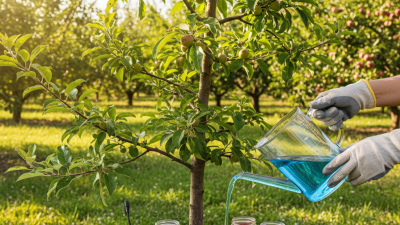
Used carefully, Water Soluble Fruit Tree Fertilizer can provide more precise feeding than some slow-release products. Gardeners can mix it according to the label, apply it around the active root area, and avoid piling solution against the trunk. A measuring spoon, a ten-liter watering can, and a simple feeding record can prevent guesswork. Small details count.

Still, the method is not perfect. Nutrients may wash away after heavy rain, and repeated use can increase salt levels in poorly drained soil. Soil testing is more reliable than judging leaves alone. This guide will explain how the fertilizer works, when fruit trees may need it, and which common mistakes deserve a second look. The goal is balanced growth, not excessive foliage with little fruit.
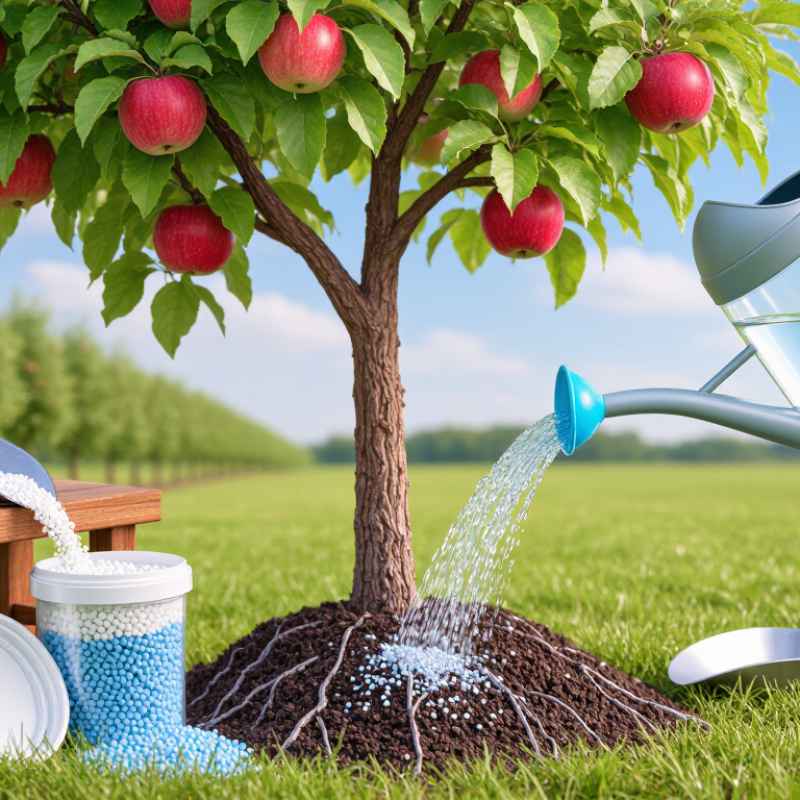
What Is Water Soluble Fruit Tree Fertilizer?

Definition and Basic Characteristics of Water-Soluble Fruit Tree Fertilizer

What Is Water Soluble Fruit Tree Fertilizer?

Definition and Basic Characteristics of Water-Soluble Fruit Tree Fertilizer

Water-soluble fruit tree fertilizer is a dry or liquid nutrient product that dissolves in water. The solution carries nutrients directly to the root zone during irrigation. Some formulas also permit foliar application, but the product label must allow it.

Its main characteristic is rapid nutrient availability. Common nutrients include nitrogen, phosphorus, and potassium. Many formulas also contain calcium, magnesium, iron, zinc, or boron. These nutrients support leaf growth, flowering, fruit development, and general tree function.

The concentration can be adjusted carefully. This helps growers respond to a tree’s age, crop load, and soil condition. A young citrus tree may need a lighter solution than a mature tree carrying heavy fruit. Water quality matters too. Hard or alkaline water can reduce nutrient availability and leave deposits around emitters.

This fertilizer is not a replacement for healthy soil. It supplies nutrients, but it does not add organic matter or repair poor drainage. Overuse may burn roots, push excessive leaf growth, or increase nutrient leaching after rain. That part is easy to underestimate.

A soil test provides more dependable guidance than leaf color alone. Apply the measured solution evenly, and keep it away from direct trunk contact. In practice, results can vary between orchards, even with the same application rate. Temperature, irrigation timing, root health, and previous fertilization all influence the outcome.
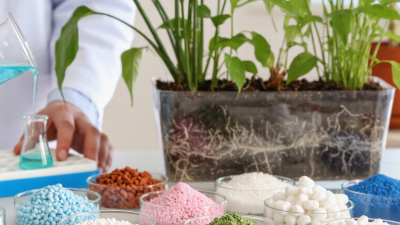
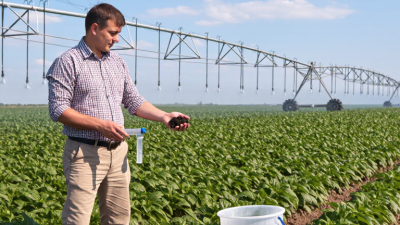
What Is Water-Soluble Fruit Tree Fertilizer?

Water-soluble fruit tree fertilizer is a fertilizer designed to dissolve in irrigation water or water used for foliar application. Its nutrients are supplied in readily soluble forms, allowing plants to receive nitrogen, phosphorus and potassium through the root zone or leaves.

The chart compares common water-soluble fertilizer grades using the standard N–P₂O₅–K₂O label format. Values are percentages by mass: nitrogen (N), phosphate expressed as P₂O₅, and potash expressed as K₂O. These grades describe nutrient composition rather than a universal recommendation; application rates should follow the crop, soil test and product label.

Nutrient Composition and How It Supports Fruit Tree Growth

What Is Water Soluble Fruit Tree Fertilizer?

Water soluble fruit tree fertilizer dissolves in irrigation water and delivers nutrients through the root zone. Its nutrient composition usually includes nitrogen, phosphorus, and potassium, known as NPK. Nitrogen supports new leaves and shoots. Phosphorus assists root development and flower formation. Potassium helps regulate water movement, fruit quality, and stress tolerance. Many formulas also contain calcium, magnesium, sulfur, iron, zinc, and boron. These smaller nutrients matter, although trees need them in lower amounts.

In my experience, young trees respond quickly when fertilizer is mixed accurately and applied to moist soil. However, faster results can become a weakness. Excess nitrogen may produce soft, leafy growth with fewer flowers. High salt levels can also damage fine roots, especially in containers or dry ground. A soil test gives more dependable guidance than guessing from leaf color alone. Nutrient needs also change with species, tree age, crop load, and soil pH. I would not treat one feeding schedule as universal.

Tips: Dissolve the measured fertilizer completely before application. Water around the root spread, not against the trunk. Apply smaller doses during active growth, and avoid feeding drought-stressed trees. Watch new leaves for pale color, curling, or scorched edges. These signs can suggest imbalance, but they may also reflect pests or poor drainage. Keep simple records of dates, weather, growth, and fruiting. Those notes make the next adjustment more informed.

What Is Water Soluble Fruit Tree Fertilizer? – Nutrient Composition and How It Supports Fruit Tree Growth

Nutrient or Property Typical Form in a Water-Soluble Fertilizer Typical Concentration or Range Function in Fruit Trees Growth Stage or Practical Consideration
Nitrogen (N) Nitrate nitrogen, ammonium nitrogen, or urea nitrogen Commonly about 5–20% of product weight, depending on the formulation Supports leaf development, shoot growth, chlorophyll production, and photosynthesis. Most useful during active vegetative growth. Excessive nitrogen late in the season can promote overly vigorous shoots and may delay dormancy or reduce fruit quality.
Phosphorus (P) Usually listed as available phosphate (P2O5) Commonly about 0–15% P2O5 Participates in energy transfer, root development, flowering, and early fruit formation. Important when soil tests indicate low phosphorus. Additional phosphorus is usually unnecessary in soils that already contain adequate levels.
Potassium (K) Usually listed as soluble potash (K2O), often supplied by potassium sulfate or potassium nitrate Commonly about 5–30% K2O Regulates water movement, enzyme activity, carbohydrate transport, fruit size, color, firmness, and stress tolerance. Especially important from fruit set through fruit enlargement. Avoid excessive applications because high potassium can interfere with magnesium or calcium uptake.
Calcium (Ca) Calcium nitrate or other soluble calcium salts Often about 1–10% calcium in specialized formulations Strengthens cell walls and supports root and shoot tip growth, fruit firmness, and membrane function. Calcium moves mainly with the transpiration stream, so consistent soil moisture is essential. Foliar calcium does not replace correction of major root-zone deficiencies.
Magnesium (Mg) Magnesium sulfate or another soluble magnesium salt Often about 0.5–5% magnesium in complete formulations Central component of chlorophyll and an activator of several enzymes involved in photosynthesis and carbohydrate metabolism. Useful when older leaves show interveinal yellowing confirmed as magnesium deficiency. Excess magnesium may compete with calcium and potassium.
Sulfur (S) Sulfate or elemental sulfur, depending on the product Commonly about 1–10% sulfur in formulations containing sulfate salts Required for certain amino acids, proteins, enzymes, and chlorophyll formation. Sulfate sulfur is immediately available in solution. Elemental sulfur must be converted by soil microorganisms and acts more slowly.
Iron (Fe) Ferrous sulfate or chelated iron such as Fe-EDTA, Fe-DTPA, or Fe-EDDHA Usually supplied at trace levels, commonly about 0.05–1% iron Supports chlorophyll synthesis and electron-transfer reactions involved in photosynthesis. Iron deficiency commonly appears as yellow young leaves with greener veins. Chelated forms generally remain more available than iron sulfate in high-pH soils.
Zinc (Zn) Zinc sulfate or chelated zinc Often about 0.02–0.5% zinc Contributes to enzyme activity, hormone production, shoot growth, and leaf expansion. Deficiency can cause shortened internodes and small leaves. Apply only when a soil, tissue, or visual diagnosis supports the need.
Boron (B) Borate or soluble boric compounds Usually a very small amount, commonly about 0.01–0.2% boron Supports cell-wall formation, pollen germination, pollen-tube growth, and fruit set. The safe range between deficiency and toxicity is narrow. Accurate measurement and soil or tissue testing are important before application.
Manganese (Mn) Manganese sulfate or chelated manganese Often about 0.01–0.5% manganese Activates enzymes and contributes to photosynthesis and nitrogen metabolism. Availability decreases in alkaline soils. Excess manganese can become toxic in strongly acidic, poorly drained soils.
Molybdenum (Mo) Sodium or ammonium molybdate Normally present only at trace levels, often below 0.01% Helps plants convert nitrate into forms that can be used to build proteins. Fruit trees need very small quantities. Routine application is not recommended unless a deficiency is confirmed.
Water Solubility Fully or highly soluble mineral salts and, in some products, soluble chelates Designed to dissolve in irrigation water or a spray solution Allows nutrients to reach the root zone quickly and supports precise fertigation or foliar feeding. Fast availability also increases the risk of leaching, salt buildup, leaf burn, or root injury if the concentration or application frequency is excessive.
N-P-K Label Format Three numbers showing the guaranteed analysis of nitrogen, phosphate, and potash Example: 10-5-15 means 10% N, 5% P2O5, and 15% K2O by weight Provides a quick comparison of the primary nutrient balance among fertilizer formulations. The numbers do not indicate the exact amount a tree needs. Selection should consider soil test results, tree age, crop load, growth stage, and local recommendations.
Solution pH and Salinity Depends on the nutrient salts, water quality, and mixing rate No single universal value; monitor the final solution when possible Influences nutrient availability, root health, and the risk of osmotic stress. Use clean water, follow the product label, avoid mixing incompatible calcium and phosphate or sulfate concentrates, and irrigate thoroughly when salt accumulation is a concern.

Nutrient percentages are representative ranges rather than a single standard formula. The correct rate should be based on the fertilizer label, soil or leaf analysis, tree species, rootstock, growth stage, irrigation method, and local horticultural guidance.

How Water-Soluble Fertilizer Works in Soil and Plant Roots

Water-soluble fruit tree fertilizer dissolves in irrigation water and releases nutrients as charged particles. These nutrients move through the soil solution toward active roots. Nitrogen supports leaf growth, while phosphorus assists energy transfer and root development. Potassium helps regulate water movement and fruit quality. Roots respond quickly.

Root hairs absorb dissolved nutrients through thin cell membranes. Water carries these nutrients into the xylem, which transports them upward to leaves, flowers, and developing fruit. In the root zone, moisture matters greatly. Dry soil slows absorption, while heavy irrigation can wash soluble nutrients below the root system. Sandy soil usually loses nutrients faster than clay soil.

Field experience shows that small, regular applications often work better than one heavy dose. A grower should consider tree age, crop load, soil texture, and recent rainfall. Soil testing and occasional leaf analysis provide stronger evidence than leaf color alone. I once treated pale leaves as a nitrogen problem, but poor drainage was the real cause. That mistake was expensive. High salt levels can injure tender roots, causing brown edges and weak growth. Measuring fertilizer concentration and checking drainage can reduce this risk. Water-soluble fertilizer is effective, but it is not automatically precise. Timing, dilution, and root-zone conditions decide how much the tree actually uses.

Common Types and Suitable Applications for Different Fruit Trees

What Is Water Soluble Fruit Tree Fertilizer?

Common Types and Suitable Applications for Different Fruit Trees

Water soluble fruit tree fertilizer dissolves in irrigation water and delivers nutrients quickly to active roots. Common formulas include balanced NPK blends, nitrogen-focused feeds, potassium-rich formulas, and products containing calcium, magnesium, or trace elements. A balanced formula suits young trees during leaf and branch development. Excess nitrogen, however, can create soft growth and fewer flowers.

Citrus trees often need regular nitrogen, magnesium, and iron support, especially in light or alkaline soils. Apple and pear trees benefit from moderate nitrogen in spring, followed by careful potassium management during fruit development. Stone fruits, such as peaches and cherries, usually need steady nutrition but dislike heavy feeding after vigorous growth begins. Berry plants often respond well to dilute applications because their roots are shallow.

Timing matters more than a large dose. Apply diluted fertilizer to moist soil around the root zone, not against the trunk. A soil test gives better guidance than leaf color alone. I have seen gardeners increase fertilizer when leaves looked pale, only to worsen salt buildup. That approach needs reconsideration. Water thoroughly after feeding, and reduce applications during drought, extreme heat, or dormancy. Always follow the product label and observe new growth before repeating the treatment.

Safe Mixing, Application Methods, and Storage Considerations

What Is Water Soluble Fruit Tree Fertilizer?

Water-soluble fruit tree fertilizer dissolves in water for rapid root uptake. It commonly supplies nitrogen, phosphorus, potassium, and trace elements. The International Fertilizer Association’s 2024 outlook projects global fertilizer demand above 200 million tonnes of nutrients by 2028. That scale makes accurate handling important, even in a small orchard. FAO’s 2024 Statistical Yearbook also records global fertilizer use above 180 million tonnes in recent reporting years. More fertilizer does not mean better fruit.

Safe mixing starts with the product label and a clean container. Wear gloves and eye protection. Add water first, then measure fertilizer carefully. Never guess. Mix slowly to prevent clumps and splashing. Do not combine concentrated fertilizers, pesticides, or calcium products without compatibility guidance. A small jar test can reveal sediment or heat before orchard use. I still prefer testing one tree first, because water quality can change the result. Apply the diluted solution around the active root zone, not against the trunk. Avoid hot afternoons, damaged bark, and saturated soil. A soil or leaf test should guide the rate.

Store unused fertilizer sealed in its original container. Keep it dry, cool, frost-free, and away from food, animal feed, and children. Moisture can harden crystals and weaken application accuracy. Keep the safety data sheet nearby. Record the opening date and inspect the container before reuse. Guidance from university extension services repeatedly stresses label compliance and calibrated equipment, yet real-world measuring errors remain common. That part deserves more attention.